Engineered Aluminum Louver & Fenestration Systems
Tested for structural rigidity, thermodynamic efficiency, and microclimate durability in commercial and residential architectures across León, Silao, and the Bajío corridor.
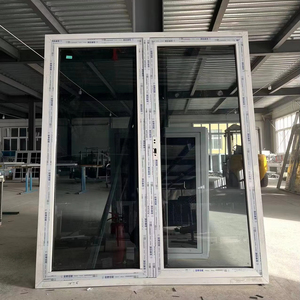
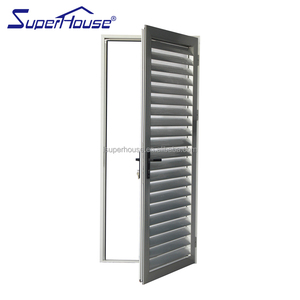
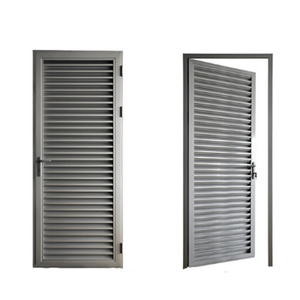
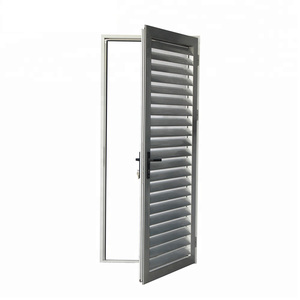
Localized Application Scenarios in the León & Guanajuato Territory
Analyzing physical thermodynamic constraints, atmospheric elevation, and functional demand in central Mexico’s manufacturing and architectural epicenter.
Industrial Logistics & Automotive Corridors (Silao-León)
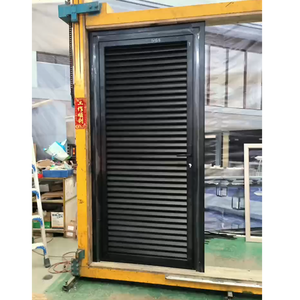
León represents the industrial backbone of Guanajuato, surrounded by tier-1 automotive supply plants, leather processing facilities, and high-throughput distribution hubs. In these settings, electrical substations, air-compressor utility rooms, and material staging areas require non-stop natural cooling without sacrificing physical perimeter defense. Louvered doors manufactured from high-tensile 6063-T5 aluminum extrusions provide high free-area ventilation ratios (FAR) while shielding expensive instrumentation from airborne debris and heavy precipitation.
High-End Residential Enclaves (Campestre & Gran Jardín)
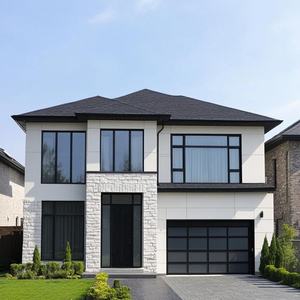
In luxury private residential subdivisions across northern León, such as El Molino and Club Campestre, modern Mexican regionalism embraces expansive indoor-outdoor transitions. Louvered patio dividers, concealable service corridor barriers, and operable architectural shutters provide essential cross-ventilation. When paired with marine-grade fluoropolymer or Qualicoat Class 2 powder coatings, these systems resist thermal degradation caused by intense solar exposure while ensuring visual privacy and seamless aesthetic integration.
Hospitality & Commercial Mixed-Use Complexes
With León hosting global events like the International Balloon Festival and SAPICA at Poliforum León, commercial hospitality venues require durable infrastructure. Rooftop mechanical screening, kitchen service entrance louver doors, and hotel exterior enclosures demand superior acoustic dampening and fire-rated safety profiles. Louver designs engineered with integrated acoustic insulation and insect barriers minimize ambient mechanical hum while maintaining continuous passive air change.
Architectural Trends Transforming the León Fenestration Industry
The convergence of nearshoring expansion, energy efficiency mandates, and contemporary architectural philosophies in the Bajío basin.
Passive Thermal Regulation at 1,800m Altitude
León is located at approximately 1,815 meters above sea level in a semi-arid climate, featuring significant diurnal temperature swings—cool desert mornings followed by intense mid-afternoon solar irradiance. Modern commercial developers are moving away from full HVAC reliance toward hybrid passive ventilation envelope designs. Aerodynamically profiled louver slats allow ambient nocturnal airflow to flush interior heat reservoirs, drastically reducing daytime mechanical cooling requirements.
Industrial Supply Chain Nearshoring Demands
The rapid expansion of the Bajío industrial corridor due to North American nearshoring has accelerated demand for international building code compliance. Institutional developers require doors, windows, and perimeter shutters that align with ASTM E330 structural deflection benchmarks, NFPA ventilation codes, and ISO quality management. Direct procurement from vertically integrated Chinese manufacturing hubs allows Mexican general contractors to achieve predictable project delivery schedules and scalable cost efficiency.
Anti-Corrosion Finishes Resisting UV & Chemical Fallout
Due to the combination of elevated UV exposure from high altitude and industrial emissions typical of major leather tanning and manufacturing clusters, standard mill-finish or cheap spray-painted metals experience rapid chalking and micro-pitting. Consequently, Guanajuato specifiers are increasingly prioritizing continuous architectural powder coating with Qualicoat Class 2 accreditation or architectural anodizing exceeding 20 microns to guarantee color stability over 15 to 20-year cycles.
| Engineering Parameter | Standard Commodity Louver | DERCHI Engineered System | Relevance to León Projects |
|---|---|---|---|
| Alloy Metallurgy | Recycled 6063 Scrap (variable tensile) | Primary 6063-T5 / 6060-T6 Extrusion | Prevents slat sagging over wide commercial industrial spans |
| Locking Mechanism | Single-point mechanical latch | Patented 4-Side 6-Point Multi-Lock | Forced-entry deterrence for luxury residential & secure utility rooms |
| Surface Coating | Standard solvent liquid spray | AkzoNobel / PPG Qualicoat Class 2 Powder | Withstands extreme UV degradation at 1,815m Bajío altitude |
| Free Area Ratio (FAR) | 30% - 40% (high air choke) | 52% - 64% Aerodynamic Chevron Design | Maximizes natural ventilation while blocking driving rain during summer storms |
| Glass Integration | Single-pane non-tempered or none | Thermal break profile with Low-E double glazing | Isolates acoustic noise from factory floors and highway corridors |
World-Class Extrusion & Custom Engineering Capabilities
Direct supply advantages from Guangdong Dejiyoupin Doors and Windows Co., Ltd. (DERCHI), a globally verified fenestration pioneer with over 25 years of technical leadership.
180,000 m² Facility
Equipped with fully automated Industry 4.0 cutting centers, double-head CNC machining, and automated corner crimping lines providing over 1,000,000 m² annual capacity.
100+ National Patents
Innovator of the patented four-side six-point forced-entry resistance multi-point locking system, providing uncompromising perimeter security across all hinged and sliding setups.
Xinhua Recognized Brand
Accredited as a "China Famous Brand" by Xinhua News Agency, verifying strict enterprise governance, sustainable manufacturing, and premier commercial reliability.
International Certifications
Full conformance with NFRC (USA), CSA (Canada), ENERGY STAR®, CE, AS2047, and ISO 9001 quality frameworks, ensuring smooth customs processing and technical sign-offs in Mexico.
Frequently Asked Questions for Sourcing to León, Mexico
Addressing supply chain mechanics, import logistics, regulatory standards, and job-site installation requirements.
How does DERCHI ship aluminum door systems directly to Guanajuato/León?
Shipments depart from Shenzhen or Guangzhou ports directly to the Port of Manzanillo (Colima) or Lázaro Cárdenas (Michoacán). From there, containers transit via bonded freight rail or direct tractor-trailers directly to León customs brokers or job-site staging facilities. All export units are enclosed in heat-treated fumigated wooden crates with protective film and corner guards to eliminate shipping shock.
Can the louver profiles be customized for specific mechanical air exchange requirements?
Yes. Our engineering division works directly from your mechanical CAD/BIM schematics. We calculate the exact aerodynamic Free Area Ratio (FAR) required for generator rooms, pump housings, or residential breezeways, offering fixed Z-blades, storm-proof chevron blades, and motorized adjustable louvers capable of tying into building management systems (BMS).
How do your aluminum products comply with Mexican building standards (NOMs)?
While Mexico utilizes NOM standards for specific safety markers, institutional Bajío projects broadly reference international ASTM, AAMA, and NFRC criteria for structural deflection, air infiltration, and water penetration. DERCHI’s product lines are tested to North American and Australian standards, ensuring complete compliance with Mexican structural engineering verifications.
What measures ensure dimensional precision for custom rough openings?
Before metal cutting begins, our technical engineering office produces millimeter-accurate shop drawings detailing jamb clearances, floor track embedment depths, flashing channels, and hardware placement. Production only commences following the architect's and general contractor's formal drawing approval, preventing expensive fitment modifications on site.