Featured Fenestration Systems for NYC Projects
Direct factory configurations manufactured with European CE standards (EN 14351-1), multi-point German hardware, and high-performance polyamide thermal breaks.
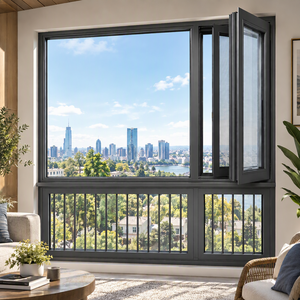
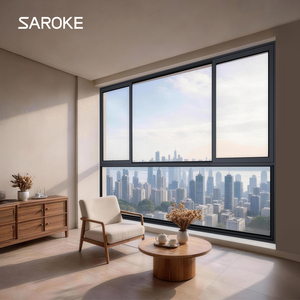
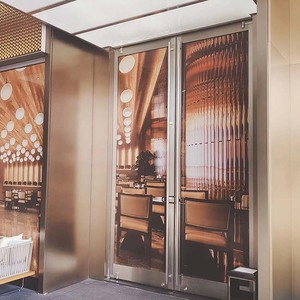
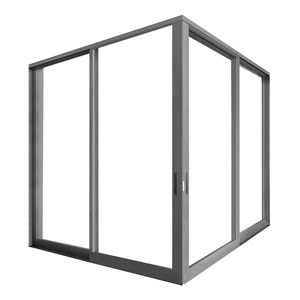
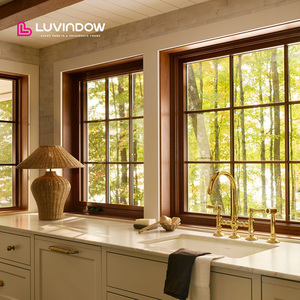
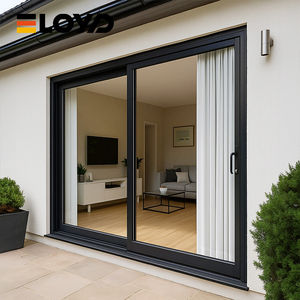
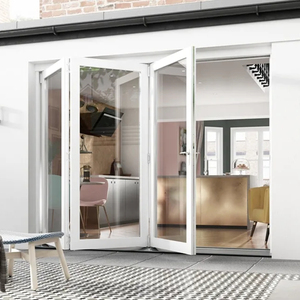
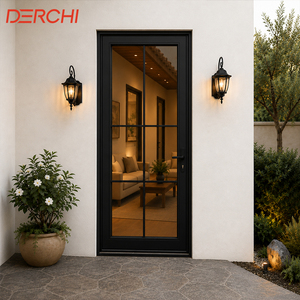
Technical Fenestration Architecture: The New York City Built Environment
Procuring exterior fenestration for culinary environments across the five boroughs—Manhattan, Brooklyn, Queens, the Bronx, and Staten Island—demands rigorous compliance with hyper-dense municipal constraints. An experienced CE certified aluminum kitchen windows exporter must deliver engineering solutions that bridge stringent European performance metrics (EN 14351-1 / CE Marking) with the prescriptive mandates of the New York City Building Code (NYCBC Chapter 14 and 24), the New York City Energy Conservation Code (NYCECC), and Local Law 97 (LL97) carbon caps.
In modern urban multi-family residential towers and historic brownstone gut renovations, the kitchen window functions not merely as an aesthetic opening, but as an active mechanical junction. It must resist intense negative wind load vortexes generated by surrounding high-rises, provide rapid air purge capabilities during high-heat cooking cycles, mitigate grease-induced seal deterioration, and resist the constant low-frequency noise generated by metropolitan traffic and transit infrastructure.
Tailored Fenestration Typologies for NYC Architecture
Distinct neighborhood typologies demand customized thermal breaks, structural framing, and hardware operations to satisfy municipal inspectors and discerning clients.
High-Rise Condominiums
Engineered for high-altitude wind pressure (DP +/- 65 PSF) in Midtown and Financial District towers. Incorporates tilt-and-turn restrictors to provide child-safe rapid micro-ventilation without compromising structural integrity.
Brownstone Restorations
Complies with Landmarks Preservation Commission (LPC) sightline criteria across Park Slope, Brooklyn Heights, and Harlem. Features ultra-slim thermal-break profiles that replicate historic Crittall steel industrial aesthetics.
Multi-Family Renovations
Turnkey fenestration arrays for outer-borough multi-family portfolios aiming to evade severe Local Law 97 greenhouse gas fines through low U-factor triple glazed insulated glass units (IGUs).
Coastal Waterfronts
Engineered for Long Island City, Williamsburg, and Rockaway peninsulas with AAMA 2605 fluoropolymer coatings, resisting salt air corrosivity, heavy coastal gusting, and rain-driven water infiltration.
Emerging Trends Shaping NYC Window Specifications (2025–2030)
Forward-thinking developers leverage advanced European aluminum systems to maintain compliance, improve market asset valuations, and deliver occupant comfort.
Passive House & Decarbonization Mandates
With NYC Local Law 97 enforcing strict carbon emission penalties per square foot, architects are replacing leaky double-hung units with multi-chamber thermally broken aluminum windows featuring 34mm polyamide insulation strips and argon gas fills to lock in thermal energy.
Acoustic Decoupling (OITC Focus)
Given the acoustic density of the MTA subway lines, sirens, and cross-borough traffic, kitchen and dining zones now demand high Outdoor-Indoor Transmission Class (OITC) ratings. Utilizing asymmetrical laminated glass configurations (6mm + PVB + 8mm) dampens vibration frequencies cleanly.
Indoor Air Quality (IAQ) & Grease Resistance
Modern NYC apartments often lack massive ducted range hoods. Windows engineered with dual-action tilt-and-turn mechanics allow vertical convective airflow to quickly displace volatile organic cooking compounds and moisture without inducing horizontal wind shear across indoor burners.
Engineering Performance Matrix: European CE vs. Typical NYC Spec
Evaluating technical baselines across critical building envelope parameters to ensure straightforward DOB plan approval.
| Engineering Parameter | Standard NYC Commercial Spec | DERCHI CE Certified Export Series | Compliance / Advantage |
|---|---|---|---|
| Thermal Transmittance (U-Factor) | 0.28 - 0.35 BTU/h·ft²·°F | 0.18 - 0.22 BTU/h·ft²·°F | Exceeds NYCECC 2024 / LL97 |
| Acoustic Isolation (STC / OITC) | STC 28 - 32 / OITC 24 | STC 42 - 45 / OITC 36 - 38 | Acoustic Comfort Near Subway / Traffic |
| Air Infiltration Resistance | ≤ 0.30 cfm/ft² (ASTM E283) | ≤ 0.05 cfm/ft² (EN 12207 Class 4) | 600% Greater Air Infiltration Seal |
| Structural Wind Load (DP) | DP 45 - 50 PSF | DP 65 - 85 PSF (EN 12210 Class C5) | Rated for 50+ Story High Rises |
| Security & Hardware System | Single or dual cam locks | Patented 4-Side 6-Point Hardware | Anti-Forced Entry & Uniform Compression |
| Coating & Surface Finish | Standard AAMA 2603 Powder | Qualicoat Class 2 / AAMA 2605 Fluoropolymer | Grease, Acid & Marine Salt Proof |
Guangdong Dejiyoupin: The Manufacturing Engine Behind DERCHI
Sourcing directly from Guangdong Dejiyoupin Doors and Windows Co., Ltd. provides New York real estate developers, general contractors, and trade exporters an institutional-grade supply chain advantage. With over 25 years of relentless fenestration innovation, our manufacturing footprint eliminates tier-two broker markups and lead-time volatility.
180,000 m² Production Base
Equipped with automated German CNC cutting lines, multi-axis machining centers, and automated glazing robot stations producing over 1,000,000 m² annually under ISO 9001 quality protocols.
Patented 4-Side 6-Point Lock
Featuring our proprietary multi-point perimeter compression locking invention patent that guarantees consistent airtightness, water tightness, and maximum resistance against forced entry.
Xinhua "China Famous Brand"
Recognized by Xinhua News Agency for manufacturing integrity. Over 18,000 projects delivered globally across North America, Europe, Australia, and the Middle East.
Frequently Asked Questions for NYC Procurement
Clear, direct answers for architects, structural engineers, developers, and general contractors sourcing for New York projects.
Does CE certification satisfy the New York City Department of Buildings (DOB) approval process?
How do your aluminum kitchen window assemblies help avoid Local Law 97 financial penalties?
Can you engineer kitchen windows to meet historic Landmarks Preservation Commission (LPC) guidelines?
How does cooking vapor and oil grease affect window seals in tight urban kitchens?
Can DERCHI fabricate to custom imperial rough opening dimensions for retrofit jobs?
What export packaging protocols ensure glass and frames survive oceanic transit to the Port of NY & NJ?
What is the standard lead time from approved shop drawings to port delivery?
Empower Your Next New York Project With Precision Engineering
Direct factory supply, fully verified CE & North American certifications, comprehensive shop drawings, and direct shipping logistics for developers, general contractors, and fenestration distributors.
Get Catalog