1. Industrial Architecture of Bathroom Fenestration: Critical Performance Factors
Bathroom environments represent the most hostile localized hygrothermal microclimate in commercial and high-density residential buildings. Fenestration systems installed in wet zones operate under continuous interior relative humidity (RH) exceeding 85% to 95%, accompanied by cyclic chemical exposure from surfactants, chlorides, and volatile cosmetic vapors. Specifying architectural aluminium bathroom windows requires structural mitigations against vapor permeability, electrolytic galvanic degradation, and progressive interstitial seal oxidation.
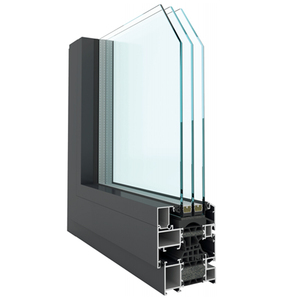
As an international enterprise holding over 100 patents—including our proprietary 4-side 6-point multi-locking mechanism—our manufacturing protocol eliminates common points of structural failure. Standard low-specification commercial windows routinely fail at the thermal-barrier junction when exposed to internal-external thermal differentials ranging from 15°C to 40°C. By deploying structurally detached multi-chamber extrusions with polyamide (PA66 GF25) thermal breaks, we decouple interior ambient moist conditions from exterior ambient temperatures, effectively raising the condensation resistance factor (CRF) past 72.
Acoustic Isolation, Obscuration Glazing, and Gas Cavities
Modern luxury hospitality and high-rise developments demand rigorous acoustic dampening alongside mechanical privacy. Bathroom envelope fenestration must prevent airborne flanking transmissions between adjacent multi-family units and damp exterior urban decibel loads. We supply specialized insulated glass units (IGUs) incorporating polyvinyl butyral (PVB) acoustic interlayers paired with argon-injected cavities to hit Sound Transmission Class (STC) ratings above 38 dB.
Glazing options include acid-etched obscure low-iron panels, ceramic frit backings, electrochromic smart glass arrays, and directional switchable liquid crystal matrices. These setups allow dynamic occupant opacity without compromising daylighting efficiency, keeping Solar Heat Gain Coefficients (SHGC) strictly compliant with local jurisdiction building energy envelopes.
2. Engineering Specification Matrix: Standard vs. Architectural Performance
Procurement teams must evaluate performance metrics beyond cosmetic framing profiles. The matrix below contrasts baseline commodity window specs with our engineered export-grade architectural installations:
Commodity Windows
- Alloy Purity: Secondary Recycled scrap
- Wall Thickness: 1.0 mm – 1.2 mm
- Surface Anodizing: Class II (10µm)
- Thermal Break: Non-broken / PVC bridging
- Sealing Gasket: Vulcanized Rubber / PVC
- Water Penetration: 150 Pa Resistance
Our Export Configuration
- Alloy Purity: Primary 6063-T5 / T6 Billet
- Wall Thickness: 1.8 mm – 2.2 mm Structural
- Surface Treatment: PVDF 3-Coat / Class I Fluoropolymer
- Thermal Break: PA66 GF25 Polyamide Bars
- Sealing Gasket: Multi-Coextruded Continuous EPDM
- Water Penetration: 700 Pa Cyclical Test Rating
Impact-Zone Engineered
- Alloy Purity: Reinforced Structural 6061-T6
- Wall Thickness: 2.5 mm – 3.0 mm Reinforced
- Surface Treatment: Marine-Grade AkzoNobel Powder
- Thermal Break: Deep Isobar Multi-Chamber
- Sealing Gasket: Continuous Vulcanized Silicone Corner
- Water Penetration: 1050 Pa ASTM E331 Hurricane
3. Future Procurement Trends: Dynamic Glazing, Low Embodied Carbon, and Prefabrication
As ESG (Environmental, Social, and Governance) targets tighten across North American, European, and Australian building sectors, international window procurement is pivoting toward verifiable lifecycle impact data. Aluminum fenestration must now carry lower embodied carbon profiles without losing structural integrity or coastal corrosion resistance.
Primary procurement trajectories include:
- Adoption of Hydroelectric-Smelted Low-Carbon Aluminum: Modern tenders increasingly specify billets smelted using renewable hydro-power grids, dropping cradle-to-gate carbon footprints from 18 kg CO₂e/kg Al to below 4.0 kg CO₂e/kg Al. Our Foshan factory leverages audited primary ingots that comply with international decarbonization goals.
- Unitized and Prefabricated Dry-Glazed Installation: The ongoing shortage of skilled on-site structural glaziers in North America and Western Europe has driven reliance on factory-sealed sub-frame assemblies. Our bathroom window series uses snap-in, precision-mitered installation fins (nailing flanges) and pre-hung sub-bucks, reducing installation times by over 45% while eliminating erratic job-site wet-caulking applications.
- Integration of Autonomous Micro-Ventilation: Contemporary building wraps achieve high air-tightness, which can trigger localized mold colonization within bathrooms if ventilation relies entirely on intermittent mechanical fans. The market is shifting to trickling micro-vent passive sash registers with integrated vapor recovery membranes, preventing interior moisture build-up even when windows remain locked.
4. Comprehensive Enterprise Advantages & Global Compliance Infrastructure
Operating a modernized 180,000 square meter industrial manufacturing base with 600+ personnel and over 25 years of engineering experience, Guangdong Dejiyoupin Doors and Windows Co., Ltd. (DERCHI) serves as a single-source exporter for developers, general contractors, and distribution networks worldwide. Recognized as a "China Famous Brand" by Xinhua News Agency, our business model bridges structural architectural design with fully automated zero-error Industry 4.0 machining centers.
Zero-Error Automation
German CNC milling networks and dual-head automated miter-cutting stations execute framing preparations within precision tolerances of ±0.1 mm, ensuring structural squareness and airtight corner seal seals.
Patented 4-Side 6-Point Lock
Unlike commodity latches that pull unevenly on gaskets, our patented hardware pulls the sash flush against EPDM perimeter gaskets from all four directions, sealing against forced entry and high-pressure rain penetration.
Global Certification Arsenal
Certified by North American NFRC, Canadian CSA, ENERGY STAR, Florida Impact NOA protocols, ISO 9001, European CE, and Australian AS2047, delivering plug-and-play regulatory compliance for global architectural spec sheets.
5. Frequently Asked Questions (FAQ) for Commercial Fenestration Procurement
How does anodized aluminum compare to PVDF fluorocarbon coatings in high-humidity bathrooms?
Can DERCHI manufacture custom irregular geometries and arched profiles for heritage retrofit projects?
What internal drainage routing avoids water accumulation in bathroom window sills?
What packaging and crating protocols protect custom fenestration during container ocean transit?
What are typical production lead times for 500+ unit multi-family mixed residential projects?
Ready to Engineer Your Project Openings?
Submit your architectural drawings, window schedules, and energy criteria for a full commercial engineering proposal.