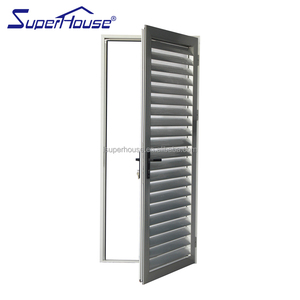
Precision Fenestration Portfolio
High-Performance Architectural Aluminum Doors
Manufactured under ISO 9001 quality management with multi-chamber thermal breaks, high-performance structural interlocks, and multi-point security hardware.
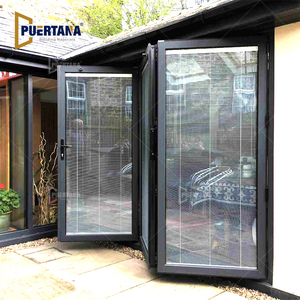
Patio Thermal Break Aluminium Bifold Accordion Bi Folding Doors Built in Integral Blinds
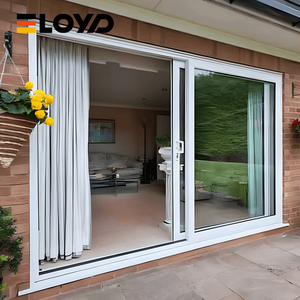
Eloyd Custom Modern Aluminum Glass Sliding Doors with Waterproof Hurricane Impact Lift Slide
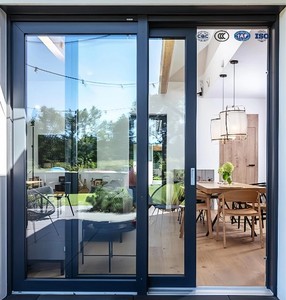
Modern Aluminum Alloy Sliding Windows And Doors with Tempered Glass Soundproof Exterior Use
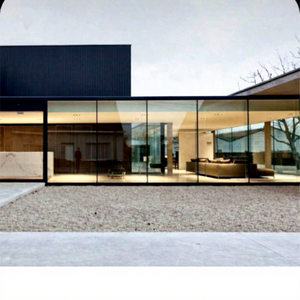
Eloyd Luxury Large Aluminum Sliding Windows And Doors Lift And Slide Glass Doors
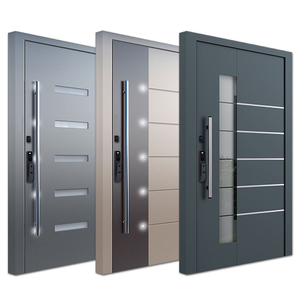
Prettyhouse Custom Exterior Pivot Door Luxury Security Aluminum Entrance Door
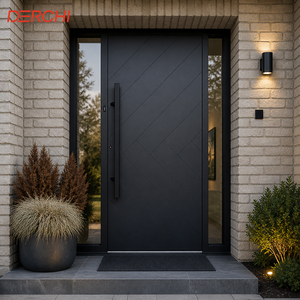
Aluminum Entrance Door Soundproof Thermal Break Aluminum Front Door Exterior Security
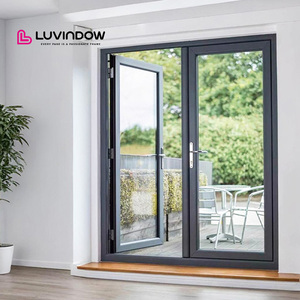
Commercial Hurricane Impact Aluminum Triple Glass French Swing Doors Patio Entrance
180,000
m² Production Facility
25+
Years Engineering Expertise
100+
Patented Technologies
18,000+
Global Projects Installed
Engineering Authority
Structural Metallurgy & Thermal Physics in Fenestration
An in-depth analysis of aluminum-framed glass door systems, raw alloy certifications, and thermodynamic performance matrices for global engineering requirements.
Alloy Metallurgy: 6063-T5 vs. 6063-T6
We strictly utilize virgin aluminum billet profiles extruded to 6063-T5 and 6063-T6 specifications with precise wall thicknesses between 2.0mm and 3.0mm. This metallurgical foundation delivers high tensile strength (≥ 205 MPa) and yield performance capable of supporting monumental, floor-to-ceiling glass assemblies with zero profile deflection under negative wind loading.
Polyamide PA66 GF25 Thermal Barriers
To eliminate internal frame condensation and mitigate radiant conduction, our profiles incorporate European-standard 24mm to 34mm technoform Polyamide PA66 reinforced with 25% short glass fibers. This matches the thermal expansion coefficient of aluminum, guaranteeing structural shear resistance and preserving total door assembly U-factors down to 0.22 BTU/(h·ft²·°F).
Patented 4-Side 6-Point Security
Equipped with our patented perimeter interlocking system, our aluminum door configurations integrate 4-side, 6-point multi-locking mechanics. Combined with shoot-bolts forged from 304 stainless steel, these components meet European RC3 / RC4 burglary resistance ratings and North American ASTM F588 forced-entry mitigation parameters.
| Performance Dimension | Standard Non-Thermal Frame | Commercial Grade (Architectural) | Our Engineered Export Standard |
|---|---|---|---|
| Alloy & Wall Caliber | Recycled Alum (<1.4mm) | Primary 6063-T5 (1.6mm - 1.8mm) | Virgin 6063-T6 (2.0mm - 3.0mm) |
| Thermal Transmittance (U-Value) | U > 1.05 BTU/(hr-ft²-°F) | U ≈ 0.38 - 0.45 BTU/(hr-ft²-°F) | U ≤ 0.22 - 0.28 (NFRC Certified) |
| Gasketing Seal Matrix | PVC / Regular Rubber Strips | Standard EPDM Rubber | Continuous Vulcanized EPDM + Silicone |
| Impact Resistance (ASTM/NOA) | Non-Rated | Static Pressure DP 45 | ASTM E1886/E1996 Large Missile DP 70+ |
| Acoustic Attenuation (STC) | STC 22 - 25 dB | STC 30 - 32 dB | STC 38 - 44 dB (Laminated IGU) |
Industry Intelligence
Future Procurement Trends in Architectural Glazing (2025–2030)
Market intelligence for real estate developers, structural engineers, and institutional importers.
1. Minimalist Sightlines & Concealed Sashes
Architectural demand is trending away from bulky structural mullions. Buyers are actively prioritizing ultra-narrow interlockers (down to 18mm sightlines) that conceal the outer frame entirely within the building envelope. This trend requires high-moment-of-inertia structural alloys to prevent deflection in panels exceeding 4 meters in height.
2. Zero-Carbon & Building Performance Directives
With updates to the International Energy Conservation Code (IECC) and Canada’s Net-Zero Energy Ready standards, fenestration specs now penalize uninsulated aluminum profiles. Procuring units with warm-edge composite spacers, argon or krypton gas fills, and vacuum-insulated spandrel designs is becoming mandatory for passing building inspections.
3. Smart Fenestration & Building Automation
Modern commercial and luxury residential projects are driving adoption of motorized concealed drive systems. Concealed linear actuators connected directly to BACnet, KNX, or smart building automation protocols enable automated thermal purge cycles, biometric entry integration, and motorized multi-point locking for hurricane security.
Standardized Execution
End-to-End Enterprise Procurement Protocol
A systematic framework designed to mitigate dimensional, thermal, and regulatory errors when importing custom architectural systems direct from China.
01
Architectural Review
Submittal of CAD/BIM drawings, structural opening schedules, required Design Pressure (DP) ratings, and thermal U-factor/SHGC targets tailored to target climate zones.
02
R&D & Shop Drawings
Structural profile calculation, wind-load simulation, profile extrusion matching, and sign-off on 1:1 millwork detail sheets including anchor-flange locations.
03
Precision CNC Machining
German CNC 4-axis profile centers execute precision corner-crimping, mechanical doweling, and hardware prep, followed by 360-degree quality inspections on every sash.
04
Export Crating & Logistical Care
Units are sealed in vapor-barrier poly wraps, foam protected, and packed in fumigated A-frame plywood crates designed for overhead container gantry unloads.
Procurement Verification
Frequently Asked Questions by Commercial Buyers
Straight answers regarding structural testing, international code compliance, and global logistical protocols.
How do your aluminum door assemblies comply with North American NFRC and CSA standards?
Our profiles are tested under simulated finite element thermal modeling through validated third-party laboratories. We formulate complete fenestration assemblies using polyamide thermal breaks, triple-sealed EPDM corner keys, and high-performance Low-E insulated glass units (dual-pane and triple-pane options with argon fill). This achieves compliant U-factors (as low as 0.22) and solar heat gain coefficients (SHGC) customized to North American climate zones 1 through 7.
What engineering provisions protect large-format glass doors against high wind and water infiltration?
To resist hurricane wind loads and driving rain, our high-exposure systems utilize stepped water drainage channels with integrated weep-hole check valves that prevent wind-driven backpressure. Profiles are strengthened with internal structural steel or composite fins that boost structural moment of inertia. Glazing pockets feature structural silicone wet-glazing or high-compression EPDM wedges capable of meeting Design Pressures exceeding DP 70.
Can our engineering team specify proprietary hardware from global manufacturers?
Yes. While our patented four-side six-point hardware delivers high resistance to forced entry, our CNC tooling centers are programmed to mill sashes and outer frames to fit European and American architectural hardware, including systems from Siegenia, Roto, GU, Hoppe, or custom electronic strike systems. Standardized dimensional submittals ensure that all mortise and strike cutouts match specified templates.
What surface treatment specifications are applied to prevent coastal and marine corrosion?
For coastal and high-salinity zones, our profiles receive architectural-grade Qualicoat Class 2 certified powder coatings or high-durability fluorocarbon (PVDF) finishes containing a minimum of 70% Kynar 500 resin. These treatments undergo 3,000-hour neutral salt-spray exposure testing (ASTM B117) to prevent chalking, peeling, and filiform corrosion along profile edges.
What packaging and shipping safeguards prevent dimensional rack or glass stress fractures during ocean freight?
Finished doors are completely pre-hung, adjusted, and tested at our Foshan facility, then disassembled into marked components or packed as complete units depending on freight constraints. Individual frames are wrapped in protective polyethylene films, reinforced with corrugated corner pads, and banded inside non-contact vertical plywood crates. Units are loaded into sea containers with high-capacity dunnage air bags to prevent shifting during maritime transit.
Ready to Source Architectural Systems for Your Next Project?
Direct from our 180,000 m² automated production facility. Send your architectural elevations, opening schedules, or tender drawings to get detailed shop drawings and code-compliant pricing.