Featured Fenestration & Entrance Systems for Global Projects
Direct factory-manufactured solutions configured with heavy-duty 6063-T5/T6 alloy, multi-cavity thermal polyamide breaks, and certified Low-E insulated glazing units (IGU).
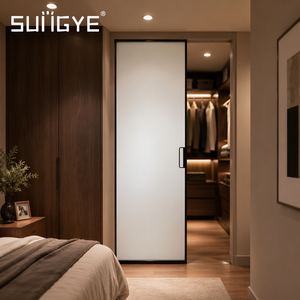
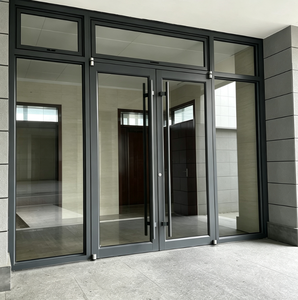
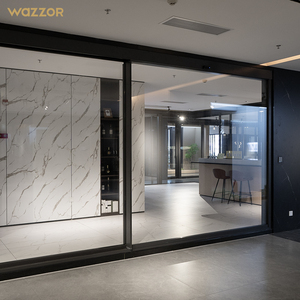
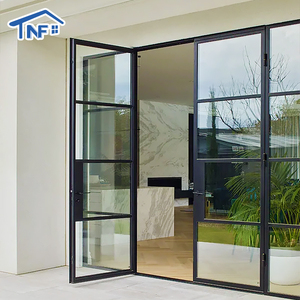
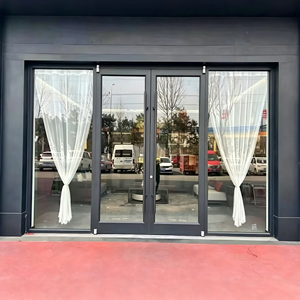
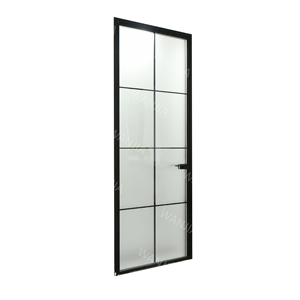
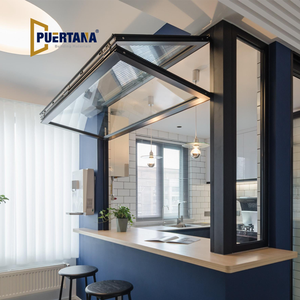
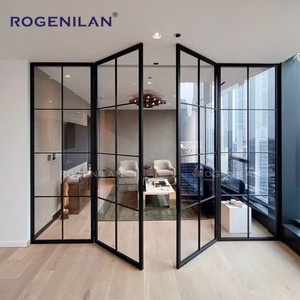
Guangdong Dejiyoupin Doors and Windows (DERCHI): Industrial Authority
Headquartered in the epicenter of global aluminum extrusion—Foshan, Guangdong—our 180,000 m² smart fabrication base delivers precision-crafted building envelopes engineered to outlast extreme architectural service conditions.
In the architectural fenestration sector, true manufacturer differentiation lies in vertical integration, dimensional repeatability, and verifiable testing compliance. As an enterprise recognized by Xinhua News Agency as a "China Famous Brand," Guangdong Dejiyoupin Doors and Windows Co., Ltd. (DERCHI) has bridged the historic gap between Chinese manufacturing cost efficiency and high-stringency Western building standards. Housing an R&D engineering corps of over 30 structural engineers, alongside a 600-strong fabrication force in Shishan Town, Nanhai District, Foshan, we operate on Industry 4.0 production principles equipped with CNC multi-axis automatic machining centers, robotic corner-crimping units, and an automated continuous dual-component structural silicone glazing line.
Unlike trading entities or small-scale assembly workshops, DERCHI maintains rigorous intellectual control over profile extrusion matrices, proprietary thermal barrier composite designs, and structural hardware assemblies. The factory holds more than 100 independently developed patents, most notably the proprietary Four-Side Six-Point Perimeter Locking Invention, an engineering innovation engineered to conquer extreme wind pressures, eliminate sash sagging, and achieve class-leading forced-entry resistance. With active certifications encompassing NFRC (USA), CSA (Canada), ENERGY STAR® v7.0, Miami-Dade NOA & Florida Product Approval (Hurricane Impact), AS2047 (Australia), CE (Europe), and ISO 9001, our operations serve premier general contractors, residential developers, and architectural firms demanding bulletproof submittal packages.
Product Sourcing & Procurement Trends Shaping Global B2B Buying
Strategic shifts in energy codes, localized carbon policies, and structural engineering paradigms transforming window and door procurement from 2025 through 2030.
Hyper-Stringent Thermal Baselines (U-Factor ≤ 0.20)
With the adoption of ASHRAE 90.1-2022, IECC 2024, and the latest Canadian National Building Codes, global procurement has decisively shifted from simple double glazing to complex warm-edge, triple-pane, and argon-insulated assemblies. Commercial developers now mandate NFRC-certified ratings with whole-window U-factors below 0.22 BTU/(h·ft²·°F) in colder zones, accelerating the demand for multi-cavity polyamides.
Ultra-Narrow Sightlines & Minimalist Profiles
High-end developers increasingly bypass traditional bulky framing for concealed frames, architectural pocket sliders, and flush-track threshold transitions. The architectural market demands interlocking stile widths under 20mm that can structurally support massive glass elevations exceeding 3.5 meters in height without exceeding allowable L/175 or L/240 deflection criteria.
Hurricane Resilience & Enhanced Impact Mandates
Climate-driven extreme weather has expanded hurricane-code adherence well beyond coastal Florida into global coastal belts and high-wind mountain regions. Sourcing trends prioritize pre-tested missile impact resistance (ASTM E1886/E1996 Large Missile D rating) utilizing high-modulus SentryGlas® (SGP) ionoplast interlayers paired with structural silicone wet-glazing.
Decarbonization & Circular EPD Transparency
Institutional REITs, institutional developers, and government-backed infrastructure projects now require verified Environmental Product Declarations (EPDs). Sourcing from China now requires auditing the upstream primary billet provenance—favoring smelters utilizing hydropowered primary smelting and certified post-consumer recycled aluminum scrap content.
Direct-from-Tier-1 Factory Model Displacement
General contractors are actively cutting intermediary trading houses to bypass 25%–40% markup markups. By collaborating directly with engineering-capable OEM/ODM factories offering integrated shop drawings, CAD BIM modeling, physical prototype validation, and sea-freight export logistics, buyers secure verifiable accountability and accelerated lead schedules.
Smart Building Envelope Automation (BMS Integration)
Windows and glazed facades are transitioning into active environmental systems. Specifications now routinely integrate low-voltage concealed motorized actuators, integrated micro-reed contact switches for security monitoring, and switchable electrochromic (smart PDLC) glass controlled directly through central Building Management Systems (BMS).
Engineering Architecture: Anatomy of High-Performance Double Glazed Fenestration
Deconstructing the structural physics, thermal barrier materials, and gas-fill dynamics separating tier-one systems from commoditized fenestration.
The thermal efficiency of an aluminium window is dictated by the fundamental balance of its components, governed by the standard formula for whole-window thermal transmittance ($U_w$):
U_w = ( Σ(A_g × U_g) + Σ(A_f × U_f) + Σ(l_g × Ψ_g) ) / ( Σ A_g + Σ A_f )
Where $A_g$ and $A_f$ represent the surface areas of the glazing and framing, $U_g$ and $U_f$ represent their respective heat transfer coefficients, and $l_g \times \Psi_g$ quantifies the perimeter linear thermal transmittance across the glass edge spacer. Because bare aluminum exhibits a very high thermal conductivity (~160 to 200 W/m·K), uncontrolled frames act as severe thermal bridges. High-performance Chinese manufacturing mitigates this through advanced composite engineering:
1. Multi-Chamber Polyamide Isolators (PA66GF25)
We reject cheap PVC or polyurethane pour-and-debridge fills in favor of precision knurled, mechanically rolled Polyamide 6.6 reinforced with 25% short glass fibers (PA66GF25). These thermal struts match the coefficient of thermal expansion of structural aluminium ($2.3 \times 10^{-5} \text{ K}^{-1}$), preventing shear failure, delamination, and air leakage during deep seasonal thermal cycling from -40°C to +80°C.
2. Double Glazed IGU Cavity Optimization
Standard 6mm air cavities are obsolete. DERCHI optimizes IGU gas chambers at an exact 16mm (5/8 inch) spacing, filled with 90%+ concentration Argon gas ($λ \approx 0.016 \text{ W/m·K}$). This specific distance halts internal convective roll-cell currents while maximizing conductive thermal resistance. Units are hermetically dual-sealed using primary polyisobutylene (PIB) and secondary structural silicone or polysulfide.
3. Warm-Edge Hybrid Spacers vs. Aluminum Tubes
Traditional continuous hollow aluminum spacers create severe edge-of-glass thermal condensation, triggering mold and premature seal degradation. Our assemblies integrate engineered warm-edge composite spacers (e.g., Technoform or stainless steel backed polymer hybrids). This slashes linear edge thermal transmittance ($\Psi_g$) from 0.08 W/m·K down to 0.032 W/m·K, increasing interior edge temperatures by 4°C to 6°C.
| System Configuration | Typical Framing Matrix | Center-of-Glass U_g | Whole-Window U_w | SHGC Range | Acoustic STC/OITC | Target Climate Zone |
|---|---|---|---|---|---|---|
| Non-Thermal Commercial | Standard Monolithic 6063-T5 | 5.7 W/m²K (Single 6mm) | 5.9 W/m²K | 0.70 – 0.82 | STC 28 / OITC 23 | Unconditioned Interior Partitions |
| Standard Double Glazed Break | 14.8mm PA66 Flat Strut | 1.6 W/m²K (Double Low-E Air) | 2.2 W/m²K | 0.30 – 0.45 | STC 34 / OITC 28 | Temperate / Mixed Climates (IECC 3-4) |
| High-Efficiency Double Glazed | 24mm–34mm Multi-Chamber PA66 | 1.1 W/m²K (Low-E + Argon) | 1.4 W/m²K | 0.20 – 0.35 | STC 37 / OITC 31 | Cold Climates (US Northern / Canadian) |
| Hurricane Impact Dual Glazed | Heavy-Wall Reinforced Alloy | 1.3 W/m²K (Lami Impact Low-E) | 1.6 W/m²K | 0.22 – 0.28 | STC 41 / OITC 35 | High Velocity Hurricane Zones (HVHZ) |
| Ultra-Thermal Triple Glazed | 39mm Multi-Chamber Isolator | 0.6 W/m²K (Dual Low-E + Dual Argon) | 0.85 W/m²K | 0.18 – 0.25 | STC 44 / OITC 38 | Passive House / Extreme Arctic Zones |
Architectural Elevation Schedules & Custom Shop Drawings
Need certified shop drawings, NFRC thermal simulation reports, or wind-load deflection calculations for an upcoming commercial tender or custom luxury development? Collaborate directly with our Senior Engineering Team.
Get CatalogInternational Testing Standards & Factory Quality Control Protocol
How top Chinese manufacturers validate structural, water, and thermal performance to guarantee seamless sign-off by North American building officials and European facade consultants.
NAFS / AAMA / WDMA / CSA 101 Harmonized Testing
Our export assemblies are engineered and rigorously tested under North American Fenestration Standard (NAFS) specifications. We certify performance class ratings up to CW (Commercial Window) and AW (Architectural Window), verifying static water penetration resistance beyond 720 Pa (15 psf) and structural uniform load deflection criteria under ASTM E330 testing up to ±4500 Pa.
360-Degree Factory In-Line QC Inspection Gates
Every single production lot passes an uncompromising 8-stage inspection matrix: 1) Spectrometer analysis of raw aluminum alloy ingots; 2) Micro-gauge anodizing/powder-coating thickness audit (AAMA 2604/2605 compliant, >65 μm); 3) Polyamide crimp tensile load testing; 4) Laser corner mitre squaring inspection (tolerance ±0.5mm); 5) Glazing pocket moisture verification; 6) Argon cavity fill gas chromatography; 7) Full-scale mock-up hardware cycle cycling; and 8) Heavy export fumigated plywood crating.
Patented Four-Side Six-Point Security Architecture
Standard sliding and casement systems fail air infiltration ratings over time due to single-point hardware deflection under negative wind load. DERCHI's patented multi-point mechanism synchronizes top, bottom, and lateral locking mushroom cams, achieving active perimeter compression across continuous EPDM gasket lines and ensuring certified airtightness class levels.
Frequently Asked Questions: Sourcing Windows from China
Detailed answers to the critical engineering, shipping, dimensional, and warranty questions asked by international project estimators, developers, and architects.
How do you guarantee that Chinese-manufactured windows comply with local building codes in the US and Canada?
Can you engineer assemblies to imperial measurements and custom rough openings?
How do you protect oversized double glazed units from cracking or damage during ocean transit?
What hardware brands and surface finish grades are utilized on export-tier products?
What is the standard production lead time and typical ocean freight schedule?
What warranty coverage and post-delivery replacement policies are provided?
Initiate Your Architectural Window Sourcing Tender
Connect directly with Guangdong Dejiyoupin Doors and Windows Co., Ltd. (DERCHI). Transmit your architectural elevation plans, door & window schedules, or custom specifications to receive a verified engineering feasibility review, thermal performance ratings, and competitive direct factory pricing within 24 hours.