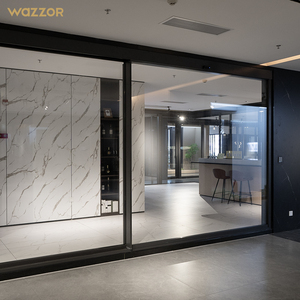
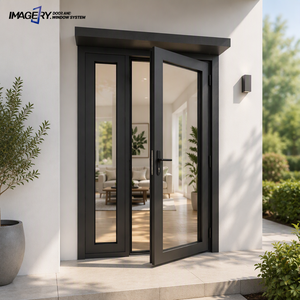
An engineering-grade comparative review of Tier-1 extrusion hubs, structural glass fabrication benchmarks, fenestration compliance, and supply chain strategies for developers and architects.
180,000m²
Intelligent Base
25+
Years R&D Mastery
18,000+
Completed Projects
100+
Invention Patents
Export-Grade Portfolio
Engineered Aluminum Glass Door Systems
Precision-machined architectural systems manufactured in accordance with strict international building codes (AAMA, NFRC, CSA, and AS2047). Designed for high thermal efficiency, extreme design pressures, and lifetime structural integrity.
How Tier-1 Aluminium Glass Door Exporters Are Evaluated
Procuring architectural fenestration across transoceanic supply lines carries profound structural, thermal, and regulatory liabilities. Leading international quantity surveyors, facade consultants, and general contractors evaluate manufacturers against six core technical pillars.
1. Structural Alloy Metallurgy
Top exporters utilize primary billet 6063-T5 or 6063-T6 architectural aluminum with tightly controlled magnesium and silicon ratios. Wall thickness must strictly adhere to structural load engineering, exceeding 2.0mm for heavy patio sliders and 3.0mm for commercial storefront hinges, preventing wind-load deflection.
2. Polyamide Thermal Break Isotherm
Sub-standard fabricators employ PVC or poured-and-debridged urethane that degrade under thermal cycling. Elite exporters engineer multi-chamber extruded Polyamide 66 reinforced with 25% glass fiber (PA66 GF25), ensuring low expansion coefficients, zero condensation, and verified U-factors meeting ASHRAE 90.1.
3. Impact & Wind Pressure Validation
For cyclone and coastal hurricane zones (Florida TAS 201/202/203, ASTM E1886/E1996, and Australian AS2047 cyclonic), frames must integrate reinforced steel stiffeners, structural silicone glazing (SSG), and laminated glass utilizing SentryGlas (SGP) or high-caliber PVB interlayers.
4. Certified Glazing Systems (IGU)
Export-grade glass processing plants feature fully automated vertical insulating glass lines equipped with warm-edge secondary silicone seals, dual Low-E coatings (soft-coat sputtering), and ≥90% certified Argon gas concentration verified by spark emission sensors to prevent fogging and perimeter seal failure.
5. Multi-Point Kinetic Hardware
Large architectural door leaves weigh upwards of 300kg to 500kg per sash. Leading factories incorporate multi-point perimeter locking assemblies, CNC precision corner cleats, stainless steel tandem bogie rollers, and certified lift-slide gearboxes engineered for over 100,000 operation cycles.
6. Full-Traceability Quality Assurance
World-class exporters maintain ISO 9001 certified manufacturing, tracking raw aluminum heats, glass tempering polarization stress testing, anodizing film thickness checks (AAMA 611 Class I), and architectural powder coat durability under AAMA 2604/2605 specifications.
As an internationally acknowledged leader among aluminum glass door exporters, Guangdong Dejiyoupin Doors and Windows Co., Ltd. operates the premier DERCHI manufacturing ecosystem. Headquartered in Foshan, China—the epicenter of global architectural metallurgy—our facility integrates independent R&D, high-speed automated extrusion lines, and rigorous ISO 9001 European-standard precision engineering.
Recognized as a "China Famous Brand" by Xinhua News Agency, DERCHI balances immense volume capacity with bespoke architectural customization, delivering over 18,000 signature commercial and luxury residential projects across North America, Europe, Australia, and the Middle East.
Compare key engineering metrics across primary door configurations. Use these target design pressures, acoustic performance metrics, and thermal parameters to formulate your project specification documents.
Emerging Global Trends in Architectural Aluminum Door Sourcing
The global fenestration landscape is undergoing unprecedented disruption driven by net-zero building regulations, decarbonization mandates, and smart building integration. Sourcing leaders must anticipate these transformative shifts.
01
Ultra-Low Embodied Carbon Billets
Architects are no longer evaluating systems purely on operational energy performance. International procurement specifications now dictate primary aluminum produced using certified green hydroelectricity or containing upwards of 75% post-consumer scrap (such as circular low-carbon brands like Circal or Hydro REDUXA), drastically slashing upfront cradle-to-gate carbon emissions.
02
Aerogel & Vacuum-Insulated Glass (VIG)
As international energy codes demand U-factors under 0.80 W/m²K (≤ 0.14 BTU/h·ft²·°F), traditional triple-pane configurations reach mechanical weight limits. Exporters are shifting toward Vacuum Insulated Glass (VIG), providing center-of-glass thermal resistance equivalent to solid masonry walls while maintaining razor-thin profiles.
03
Kinetic Smart Automation & Building BMS
Manual operation of massive 6-meter-tall glass panels is rapidly becoming obsolete. The future lies in concealed electro-mechanical drives, concealed magnetic sensors, and wireless BACnet/Modbus integrations that allow sliding pocket glass walls to communicate seamlessly with HVAC air handlers and sun-tracking shading systems.
04
Zero-Sightline Structural Glazing
Minimalist European design movements have converged with high-rise wind engineering. Advanced factories utilize structural silicone glazing (SSG) where frame sightlines are virtually recessed within plaster jambs and ceilings, leaving zero exposed metal profiles to maximize the visible light transmittance (VLT) of modern living spaces.
05
Standardized Digital Twins (BIM & ERP)
The procurement disconnect between architectural design and offshore factory tooling is narrowing. Leading exporters deliver LOD 350 to LOD 400 Building Information Modeling (BIM) components configured with parametric thermal and acoustic attributes that link directly to multi-axis CNC fabrication centers.
06
Advanced Antimicrobial & Self-Healing Coatings
Fluoropolymer finishes (PVDF / FEVE) are evolving with nanostructured coatings providing superhydrophobic self-cleaning glass surfaces and high-traffic antimicrobial finishes. In coastal areas, hyper-durable marine powder coatings resist up to 5,000 hours of continuous acetic acid salt spray (AASS) exposure.
Strategic Sourcing FAQ
Frequently Asked Questions by Commercial Buyers
Real engineering and logistical solutions to critical concerns encountered by developers, general contractors, and facade consultants when importing aluminum glass doors from China.
How do Chinese manufacturers comply with strict North American NFRC and CSA codes?
Tier-1 manufacturers such as Guangdong Dejiyoupin (DERCHI) partner with accredited international testing laboratories (Intertek, Fenestration Testing Laboratory) to obtain authentic physical test reports. Performance ratings (U-Factor, Solar Heat Gain Coefficient - SHGC, Visible Transmittance, and Air Infiltration) are validated through whole-unit simulation (THERM/WINDOW) and ASTM E283/E330/E331 physical chamber tests.
What measures eliminate transoceanic transit damage and seal failure?
Export fenestration products require rigorous export packaging protocols: frames are fully wrapped with protective polyolefin film, corners are secured with molded ABS guards, and glass leaves are cushioned using non-reactive cork spacers. The entire assembly is sealed in custom fumigated steel-reinforced timber crates, preventing racking or moisture ingress during ocean voyages.
How are imperial dimension conversions and job-site rough openings coordinated?
Our engineering team converts structural architectural plans directly into precision dual-dimension (Imperial & Metric) fabrication shop drawings. Every rough opening deduction, shim clearance allowance (typically 3/8" to 1/2"), sill pan flashing profile, and sub-frame integration is formally vetted and signed off prior to releasing CNC extrusion cut-lists.
What is the typical manufacturing lead time for large commercial batches?
Standard production runs require approximately 25 to 35 calendar days following shop drawing sign-off and color-sample sign-off. Projects requiring custom die development for bespoke profile extrusions require an additional 10 to 14 days for tooling and sample extrusion validation.
How does DERCHI guarantee long-term operational warranty support overseas?
DERCHI provides a comprehensive 10-year structural frame and glass seal warranty coupled with a 5-year mechanical warranty on European multi-point hardware. We supply an emergency spare hardware kit with every container and collaborate with local partner networks to service commercial installations across key destination markets.
What anodized or powder coat finishes resist high-salinity oceanic environments?
For coastal zones within 500 meters of open seawater, we specify Qualicoat Class 3 or AAMA 2605 compliant PVDF fluoropolymer coatings containing 70% Kynar 500 resin, or minimum 25-micron architectural anodization, protecting aluminum profiles against chalking, filiform corrosion, and intense UV degradation.
Initiate Your Engineering Consultation & RFP Quotation
Connect directly with our senior fenestration engineering group. Send project elevation drawings, opening schedules, and compliance targets to receive an authoritative quote within 24 hours.