Featured Aluminum Storm Doors & High-Performance Fenestration
Precision-extruded architectural assemblies designed for severe weather durability, thermal barrier containment, and maximum impact resistance across commercial and residential envelopes.
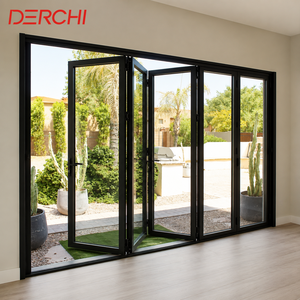
Modern High Aluminum Double Glass Accordion Large Big Bifold Folding Door
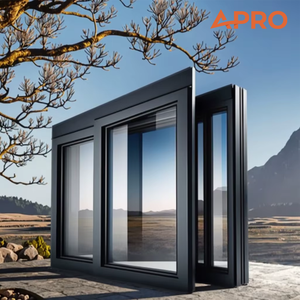
APRO Thermal & Sound Insulation Double-Glazed Contractor Sliding System
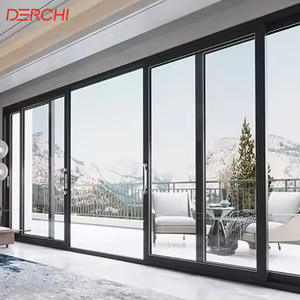
Heavy-Duty Commercial Modern Energy Efficient Exterior Sliding Door
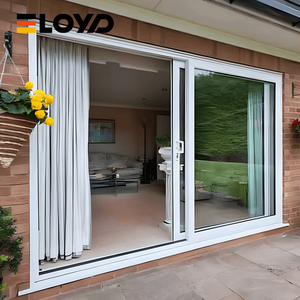
Eloyd Hurricane Impact Waterproof Lift & Slide Aluminum Door System
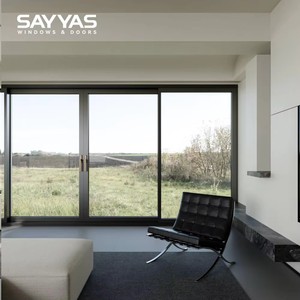
Heavy-Duty Lift & Slide Door with Integrated Retractable Mesh Screen
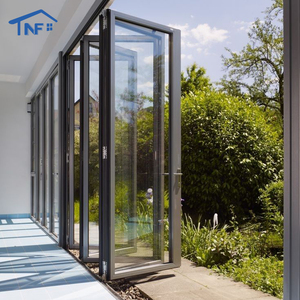
OEM NFRC Waterproof Thermal Break Aluminum Exterior Stacking Bi-Fold Door
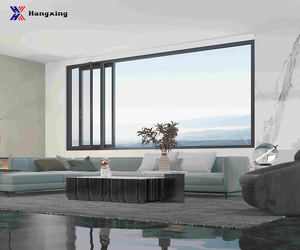
Hangxing Modern Thermal Break Double-Glazed Soundproof Sliding System
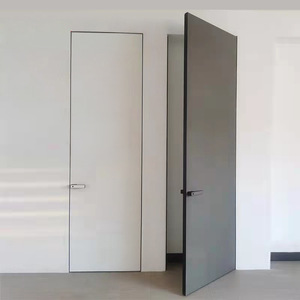
Modern Minimalist Frameless Invisible Concealed Aluminum Door System
Structural Engineering Architecture of Industrial Aluminum Storm Doors
In commercial, institutional, and high-end residential architecture, storm doors are no longer secondary ornamental barriers. Modern structural fenestration treats an aluminum storm door as an integrated outer envelope defense layer designed to intercept wind-borne debris, resist cyclical gale forces, mitigate radiant solar heat flux, and provide an impenetrable thermal barrier against extreme temperature differentials. Engineered from primary architectural aluminum alloy 6063-T6 or 6061-T6, these assemblies deliver yield strengths exceeding 170 MPa and ultimate tensile strengths above 205 MPa, far surpassing standard residential extrusions.
The structural integrity of an OEM/ODM aluminum storm door relies heavily on frame wall extrusion geometry and corner junction stability. While conventional residential doors utilize nominal profile wall thicknesses between 1.0mm and 1.2mm with pressed composite corners, commercial-grade architectural storm assemblies utilize structural profile walls ranging from 2.0mm to 3.5mm. Internal corner connections are reinforced using heavy electro-plated or 304 stainless steel corner cleats, hydraulically cold-crimped and pressure-injected with two-component polyurethane bonding adhesives. This eliminates air infiltration at miter joints, prevents racking over decades of continuous duty cycles, and ensures the door leaf maintains square tolerances within ±0.5mm across rough openings exceeding 3.0 meters in height.
Key Engineering Specification: High-performance architectural storm doors must be rated according to AAMA/WDMA/CSA 101/I.S.2/A440 (NAFS) specifications. For hurricane-prone geographical locations (e.g., coastal North America, Caribbean basins, East Asian typhoon corridors), doors must achieve a minimum Design Pressure (DP) rating of DP65 to DP100, surviving ASTM E1886 and ASTM E1996 large missile impact criteria (a 9-lb 2x4 lumber projectile traveling at 50 ft/s) without envelope breach.
Alloy Metallurgy (6063-T6)
Primary billet extrusion with high magnesium-silicon control ensures superior tensile resistance, optimized anodizing response, and crack-free mechanical crimping performance.
Patented 4-Side 6-Point Lock
Continuous multi-point interlocking steel shoot-bolts engage both jambs, header, and threshold simultaneously, neutralizing forced entry and extreme negative wind draft loads.
Polyamide Thermal Barriers
Technoform PA66 GF25 low-conductance thermal strips mechanically rolled between interior and exterior profiles reduce frame U-values below 0.22 BTU/(h·ft²·°F).
Future Procurement Trends in Architectural Storm Fenestration (2025–2030)
Global fenestration procurement is undergoing a paradigm shift driven by stringent decarbonization targets, updated International Building Code (IBC) provisions, and heightened demand for integrated climate adaptation. Procurement managers, commercial curtain wall contractors, and regional building material distributors are re-evaluating supply chains to ensure both structural durability and carbon accounting transparency.
1. Low-Carbon Smelting and Certified Recycled Content
By 2026, major institutional developers in North America and the European Union will mandate Environmental Product Declarations (EPD) for all structural envelope components. Traditional primary aluminum smelting generates up to 12 to 16 kg of CO2 equivalent per kg of finished metal. Future procurement focuses on low-carbon aluminum smelted with hydroelectric or solar power, paired with post-consumer recycled extrusion billets (yielding carbon emissions ≤ 4.0 kg CO2e/kg). Factories lacking verified ISO 14064 or Aluminium Stewardship Initiative (ASI) chain-of-custody tracking are rapidly being disqualified from premier commercial tenders.
2. Stringent Whole-Unit Thermal Transmission Thresholds
With the enforcement of ENERGY STAR® Version 7.0 requirements in North America and Passive House (Passivhaus) standards globally, storm doors must contribute measurably to the overall U-factor of the building aperture. Sourcing trends show a dramatic decline in non-thermal break profiles. Buyers now prioritize deep thermal cavity extrusion designs capable of housing 28mm to 42mm insulating glass units (IGUs) incorporating warm-edge composite spacers (such as stainless-butyl composite or structural silicone foam) and 90% concentration argon or krypton gas fills.
3. Advanced Surface Treatments and Coastal Durability
Conventional electrostatic powder coats deteriorate rapidly under coastal salt-spray fog and high UV-index exposure, exhibiting micro-cracking, chalking, and filiform corrosion within 36 to 60 months. Procurement specifications are standardizing on architectural Fluoropolymer (PVDF) liquid finishes meeting AAMA 2605 specifications (minimum 70% Kynar 500® resin system) or Super-Durable architectural powder coats conforming to AAMA 2604 (withstanding 4,000+ hours of continuous ASTM B117 salt spray testing).
| Performance Criterion | Standard Commercial Grade | Severe Weather / Coastal Storm Grade | Next-Gen Passive House Storm Door |
|---|---|---|---|
| Alloy & Wall Thickness | 6063-T5 (1.4mm – 1.8mm) | 6063-T6 Architectural (2.0mm – 3.0mm) | 6061-T6 High Strength (2.5mm – 3.5mm) |
| Design Pressure (DP) | DP35 – DP45 | DP65 – DP90 (ASTM E330) | DP100+ (Engineered Structural Sill) |
| Impact Resistance | Tempered Safety Glass (ANSI Z97.1) | Laminated PVB / SGP (ASTM E1996) | Dual-Laminated SGP Sentriglas® Composite |
| Thermal Transmittance (Uw) | 0.38 – 0.45 BTU/(h·ft²·°F) | 0.24 – 0.28 BTU/(h·ft²·°F) | ≤ 0.16 BTU/(h·ft²·°F) (Triple Low-E + Krypton) |
| Corrosion Resistance | AAMA 2603 (1,000h Salt Spray) | AAMA 2604 Super-Durable (3,000h) | AAMA 2605 70% PVDF (4,000h+ ASTM B117) |
| Compliance Verification | ISO 9001 / CE | NFRC / CSA / NOA / Miami-Dade | Passive House / ENERGY STAR v7 |
Technological Innovations Driving Storm Fenestration Evolution
The convergence of digital manufacturing, mechatronics, and material science is transforming the functionality of architectural storm doors. Modern industrial factories are integrating multi-functional hardware platforms directly into the aluminum extrusion profile rather than retrofitting surface-mounted components.
Multi-Point Automated Actuation
Concealed low-voltage European mechatronic multipoint locks integrate with building access control systems, executing self-locking compression upon contact sensor verification.
Capillary Pressure Drainage Sills
Computer-simulated internal sill baffles and non-return check valves resist extreme static water pressure (up to 720 Pa) without allowing backflow into building subfloors.
Structural Co-Extruded Gaskets
Continuous automotive-grade cellular EPDM gaskets with vulcanized 90-degree corner joints maintain elastomeric elasticity down to -45°C without hardening or shrinkage.
Enterprise Manufacturing Infrastructure & Technical Superiority
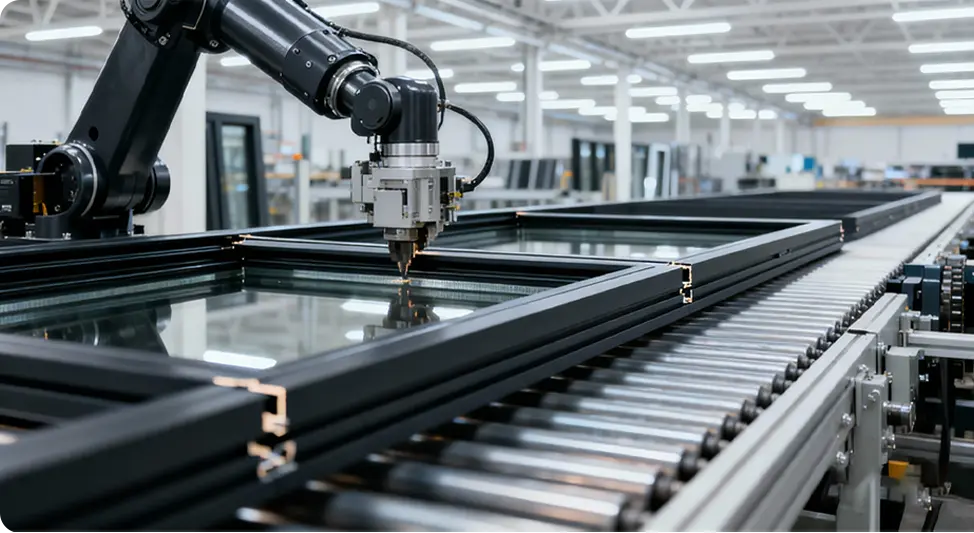
Operating through Guangdong Dejiyoupin Doors and Windows Co., Ltd. (DERCHI), our industrial ecosystem represents one of Asia's most sophisticated architectural door and window production hubs. Backed by over 25 years of engineering mastery, a massive 180,000 square meter intelligent manufacturing infrastructure, and a workforce of over 600 skilled technicians, the enterprise delivers reliable custom solutions to tier-1 developers, architects, and wholesale dealers across the United States, Canada, Europe, and the Middle East.
100+ Proprietary Patents & Locking Inventions
Holder of the exclusive Four-Side Six-Point locking invention patent, ensuring forced-entry mitigation and uniform weather-stripping compression.
North American & Global Certifications
Full testing credentials including NFRC (USA), CSA (Canada), ENERGY STAR®, CE, Australian AS2047, and Florida Hurricane impact approvals.
Xinhua "China Famous Brand" Distinction
Recognized globally for strict ISO 9001 quality management, comprehensive shop-drawing accuracy, and unyielding material consistency.
End-to-End Engineering Delivery Support
From architectural CAD/BIM drawing review and thermal simulation to export packaging in reinforced fumigated crates and remote installation assistance.
Frequently Asked Technical Questions (FAQ)
Essential engineering considerations, international logistics details, and testing standards for professional architects, builders, and commercial project specifiers.
Q1: How does your factory verify structural wind load (DP) ratings for custom sizes?
Every custom door assembly undergoes finite element analysis (FEA) to calculate mullion and profile deflection under anticipated local wind pressure. We test full-scale physical mockups in our certified test chamber in accordance with ASTM E330 (structural wind load) and ASTM E283 (air infiltration). Test reports verify maximum deflection stays well within the allowable L/175 or L/240 architectural deflection ratios.
Q2: What glazing configurations are utilized for hurricane impact-rated storm doors?
Impact-certified assemblies utilize architectural laminated glass containing either 0.090" (2.28mm) Saflex PVB or high-strength SentryGlas® (SGP) ionoplast interlayers by Kuraray. A typical coastal configuration includes 6mm Low-E tempered outer pane + 12mm argon cavity + 6mm+1.52mm SGP+6mm inner laminated assembly, fully wet-glazed using structural silicone Dow Corning 983 or 995 to prevent frame detachment under cyclic pressure.
Q3: Can you fabricate storm doors to imperial dimensions and North American rough openings?
Yes. 100% of our production for the U.S. and Canadian markets is customized to fractional imperial measurements down to 1/16th of an inch. Our dedicated bilingual engineering team translates your architectural opening schedules and CAD elevations into detailed shop drawings specifying rough opening clearance, jamb depth, brickmould profiles, nailing fin locations, and sub-sill flashing profiles before fabrication release.
Q4: How does the patented 4-side 6-point lock improve weather sealing compared to standard latches?
Conventional single-point latch systems leave door corners susceptible to negative wind deflection, allowing perimeter gaskets to separate and water to enter. Our patented mechanism utilizes mechanical transmission rods within the profile eurogroove to drive mushroom-head steel pins into adjustable frame keepers along all four edges simultaneously. This ensures 360-degree uniform gasket compression of 3.5mm to 4.0mm across the entire perimeter.
Q5: What are your standard lead times, and how do you protect large glass doors during ocean freight?
Production lead time for custom engineered OEM/ODM orders is typically 25 to 35 business days following final shop-drawing approval. For ocean transport, doors are dismounted or crated assembled depending on dimensions. Units are wrapped in protective PE static cling film, padded with high-density EPE foam buffers, enclosed in vacuum moisture-barrier bags with industrial desiccant, and bolted into non-fumigation ISPM-15 plywood crates.
Q6: Do your thermal break assemblies eliminate condensation in sub-zero climates?
Yes. By incorporating glass-fiber reinforced polyamide (PA66 GF25) thermal struts with widths up to 34mm, our thermally broken profiles decouple the outdoor cold aluminum from indoor ambient conditions. This raises the interior surface temperature above the indoor dew point even during -30°C Canadian winters, achieving Condensation Resistance (CR) ratings above 65 in compliance with NFRC 500 standards.
Q7: Can you provide private labeling, custom hardware finishes, and dealer showroom samples?
As an OEM/ODM manufacturing partner, we provide complete brand customization. This includes laser-etched stainless steel hardware logo badges, custom CNC-milled pull handles, bespoke extruded brickmould profiles, branded corner protective caps, and marketing support packages for distributor showrooms including motorized and static physical floor displays.
Q8: What surface finish warranties do you provide for harsh marine environments?
For projects located within 1,000 meters of the coastline, we recommend our AAMA 2605 certified Fluoropolymer (PVDF 70%) liquid coating or marine-grade anodized finishes (Class I, 18-25 microns). These finishes carry a comprehensive factory warranty of 10 to 20 years covering chalking, peeling, cracking, and color shift (ΔE ≤ 5 units by ASTM D2244).