Featured OEM/ODM Aluminum Window & Door Configurations
Engineered to comply with stringent North American, European, and Australian building codes. Every structural frame is extruded from primary 6063-T5/T6 architectural aluminum alloy and integrated with precision thermal-break polymer bridges and certified insulated glazing units (IGU).
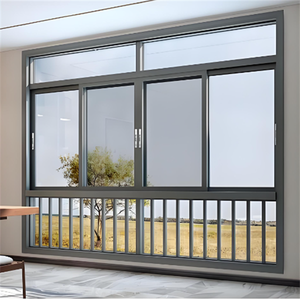 European Standard
Aluminum Casement Window Black Model European Style French Window Design with Mesh
- Polyamide PA66 Thermal Break
- Concealed Drainage & High-Tenacity Mesh
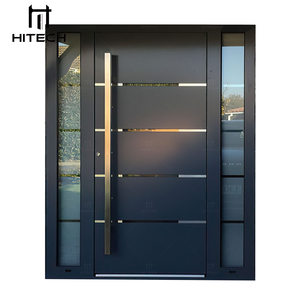 Heavy-Duty Pivot
Hitech Main Entry Pivot Door Modern Front Exterior Pivot Door Aluminum Front Door
- German Dorma/Geze Floor Springs
- Patented 4-Side 6-Point Security
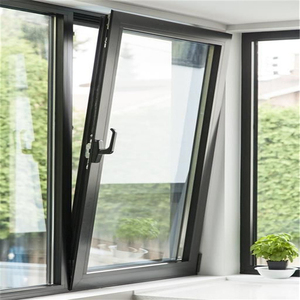 Energy Star Tier
5 Series Option Design Aluminum Energy Saving Tilt And Turn Casement Window
- Dual Mode Ventilation Kinematics
- Triple Low-E Argon Glazed (U ≤ 0.22)
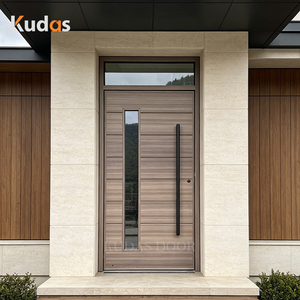 Architectural Security
Modern Vertical Glass Insert Wood Grain Finish Steel/Aluminum Entry Door with Transom
- Fluorocarbon/PVDF Wood Grain Tech
- Reinforced Anti-Pry Structural Core
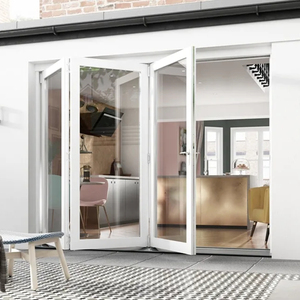 Panoramic Folding
Modern Aluminum Sliding Bifold Doors Double Glazing German Hardware Black Finish
- Stainless Steel Bottom Roller Track
- Flush Threshold Barrier-Free Living
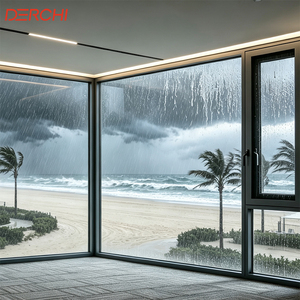 NOA Miami-Dade
DERCHI Florida NOA Miami-Dade Hurricane Proof Aluminum Glass Casement Impact Windows
- SentryGlas® Plus (SGP) Interlayer
- Design Pressure Rating DP ≥ 70 PSF
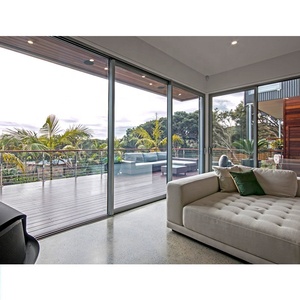 Minimalist Interior
DAIYA Half Glass Aluminum Sliding Door for Kitchen with Low-E Tempered Glass
- Ultra-Slim Sightline Frame Profile
- Dual Soft-Close Hydraulic Dampers
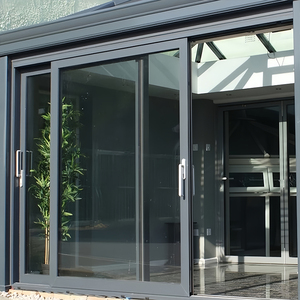 Commercial Grade
OUNA Modern Exterior Aluminum Patio Commercial Outdoor Heavy Duty Sliding Doors
- 400kg Per Sash Heavy Lift Capacity
- Multi-Track Cavity Stacking Systems
Metallurgical Integrity and Thermal Barrier Physics in Fenestration Engineering
As structural envelope specifications become more demanding across high-latitude northern jurisdictions and severe cyclonic windborne-debris zones, commercial and residential architectural systems can no longer depend on conventional extrusion profiles. DERCHI (Guangdong Dejiyoupin Doors and Windows Co., Ltd.) establishes an empirical engineering baseline by fabricating our entire structural portfolio from virgin-melt 6063-T5 and structural 6063-T6 aluminum billets. Controlled chemical homogenization and multi-stage aging deliver ultimate tensile strengths surpassing 205 MPa and yield strengths beyond 160 MPa, ensuring structural deflections conform strictly to ASTM E1300 and AAMA/WDMA/CSA 101/I.S.2/A440 under design wind loads reaching DP 70 to DP 100.
Thermal bridge interruption represents the core determinant in mitigating condensation resistance (CR) failure and elevated building envelope conductive heat loss. DERCHI systems implement precision polyamide thermal breaks consisting of PA66 reinforced with 25% chopped fiberglass (PA66GF25). These strut configurations match the linear coefficient of thermal expansion (α ≈ 2.4 × 10⁻⁵/K) of extruded aluminum, eliminating longitudinal shear delamination between composite inner and outer sub-frames subjected to continuous cyclical temperature fluctuations between -40°C and +80°C.
| Performance Dimension | Generic Non-Thermal Profiles | Standard Thermal Break (14.8mm) | DERCHI Multi-Chamber Iso-Strut (24-34mm) | Testing & Code Standard |
|---|---|---|---|---|
| Thermal Transmittance (U-Factor) | 1.10 - 1.35 BTU/(hr·ft²·°F) | 0.38 - 0.45 BTU/(hr·ft²·°F) | 0.18 - 0.24 BTU/(hr·ft²·°F) | NFRC 100 / EN ISO 10077-2 |
| Condensation Resistance (CR / CRF) | CR < 25 (Severe Sweating) | CR 45 - 55 (Moderate) | CR ≥ 72 (Zero Interior Dew Point) | NFRC 500 / AAMA 1503 |
| Air Infiltration Rate | > 0.30 cfm/ft² @ 1.57 psf | 0.15 - 0.20 cfm/ft² | ≤ 0.04 cfm/ft² (Tight Enclosure) | ASTM E283 / EN 12207 (Class 4) |
| Water Penetration Resistance | < 3.0 psf (140 Pa) | 6.24 psf (300 Pa) | ≥ 15.0 psf (720 Pa - Cyclic) | ASTM E331 / ASTM E547 / EN 12208 |
| Hurricane Impact & Wind Pressure | Unrated / Fails Cyclic Load | DP 30 - 45 (Inland Only) | DP 70 - DP 100 (TAS 201/202/203) | Miami-Dade NOA / Florida Product Approval |
*Comparative data compiled via accredited third-party test chamber validations. Detailed engineering test reports matching exact millimetric shop elevations and glass packages are supplied with every OEM/ODM contract sign-off.
Future Procurement Trends Transforming Commercial Aluminum Doors & Windows
As general contractors, façade consultants, and corporate developers pivot toward zero-carbon mandates and optimized supply chain resilience, B2B fenestration procurement is navigating three decisive shifts.
1. Low-Carbon Hydro-Extrusions & Recycled Billets
Procurement frameworks across North America and Western Europe increasingly require third-party verified Type III Environmental Product Declarations (EPD). Modern buyers demand structural aluminum produced via hydroelectric smelting with post-consumer scrap fractions surpassing 50%, compressing embodied carbon to ≤ 4.0 kg CO²e per kg of finished extrusion.
2. Prefabricated Unitized Façade Integration
Escalating on-site skilled trade costs in the United States, Canada, and Australia have triggered a massive pivot away from site-glazed 'stick' assemblies. General contractors now require fully unitized, factory-glazed, dry-gasketed door and window cassettes delivered directly into structural rough openings with pre-machined mounting brackets.
3. Direct Engineering-to-Factory Validation
B2B developers are abandoning middle-tier brokerages in favor of direct digital collaboration with OEM/ODM manufacturing engineers. Utilizing Cloud-based BIM (Revit/IFC) models, export buyers require shop drawing generation, thermal simulation FEA reports, and real-time robotic CNC cut-optimization tracking before placing factory deposits.
Industry Technology Horizons: The Next Decade of Structural Fenestration
The architectural glazing industry is experiencing profound structural transformations driven by three interlocking technological waves: vacuum insulated glazing (VIG), concealed motorized kinematics, and severe weather resiliency standards.
1. Vacuum Insulated Glazing (VIG) Synthesis: While traditional double and triple glazing with argon fills achieves acceptable thermal performance, it does so at the cost of substantial sash mass and deep pocket dimensions (up to 48mm). The commercialization of tempered VIG, incorporating an internal 0.15mm vacuum cavity maintained via micro-pillar matrices, permits center-of-glass Ug ratings of 0.60 W/(m²·K) [0.10 BTU/(hr·ft²·°F)] within an ultra-thin 10.3mm total laminate envelope. DERCHI's forward-looking R&D team is standardizing proprietary composite gasket channels specifically dimensioned for VIG integration across our European casement and slim-line sliding programs.
2. Smart-Building Motorization & Invisible Actuators: Luxury residences and class-A commercial properties require seamless structural transitions. Heavy-duty pivot doors with sash weights topping 600kg and multi-slide panels stretching 4.5 meters vertical are now specified with fully brushless linear electromagnetic motors concealed within the ceiling head jamb. DERCHI's proprietary drive interfaces link effortlessly to BACnet, KNX, Control4, and Apple HomeKit protocols, offering bi-directional feedback on seal compression, locking pin status, and automated micro-ventilation cycles based on indoor VOC and CO² sensor arrays.
3. Severe Storm Envelope Resiliency: As extreme atmospheric events multiply across Florida, Texas, the Gulf Coast, and East Asian typhoon belts, jurisdictional energy and structural requirements are merging. It is no longer sufficient for an impact-resistant window to simply withstand ASTM E1886/E1996 Large Missile D impacts (9-pound 2x4 lumber shot at 50 ft/s); envelope units must now concurrently deliver ultra-low solar heat gain coefficients (SHGC ≤ 0.23) and high acoustic transmission loss (STC ≥ 42 dB / OITC ≥ 35 dB). DERCHI achieves this synergy through ionoplast structural interlayer (SentryGlas®) chemistry laminated directly with high-selectivity magnetron sputter vacuum deposition (MSVD) Low-E glasses.
Why Top Global Builders & Wholesalers Partner With DERCHI
Guangdong Dejiyoupin Doors and Windows Co., Ltd. operates one of Asia's most comprehensive integrated fenestration manufacturing hubs. Recognized as a "China Famous Brand" by Xinhua News Agency, we bridge world-class production precision with deep cross-border compliance expertise.
180,000 m² Automated Smart Factory
Equipped with German CNC multi-axis profile machining centers, automated corner-crimping stations with dual-component structural injection, and continuous automated IGU sealing lines yielding 1,000,000+ m² annual throughput.
Patented 4-Side 6-Point Lock System
Our proprietary invention patent revolutionizes forced-entry resistance and acoustic sealing. Multi-directional mushroom cams drive simultaneously into high-tensile steel keepers along all four sash quadrants upon handle engagement.
Full International Code Coverage
We take guesswork out of municipal inspections. We maintain active compliance testing with NFRC (USA), CSA A440 (Canada), ENERGY STAR® v7.0, Florida Product Approval, Miami-Dade NOA, CE (EN 14351-1), and AS2047.
End-to-End OEM/ODM Project Service
Supported by 30+ dedicated R&D engineers and 600+ skilled personnel. From structural wind load finite element calculations and full architectural shop drawings to timber crating and on-site engineering supervision.
B2B Procurement FAQs for Commercial Buyers & Importers
Transparent, data-backed answers addressing structural engineering, custom fabrication, quality assurance, logistics, and code certification.
What specific certifications validate DERCHI systems for U.S. and Canadian building codes?
DERCHI systems maintain comprehensive testing credentials with the National Fenestration Rating Council (NFRC) for U.S. markets, certifying U-factor, Solar Heat Gain Coefficient (SHGC), and Visible Transmittance (VT). For Canada, our series are validated under CSA A440.2 (thermal) and A440.1 / NAFS (structural wind, air tightness, and water penetration). In high-velocity hurricane zones, select series possess Florida Product Approval (FPA) and Miami-Dade Notice of Acceptance (NOA) for cyclic pressure and missile impact.
Can you fabricate directly to Imperial rough openings and custom architectural sightlines?
Yes. Every single order is engineered to order (ETO). Our engineering department converts your architectural plans into detailed millimetric and fractional-inch CAD/BIM shop drawings. We accommodate unique frame depths (from 60mm to 180mm), customized nail-fin or brick-mould setbacks, sub-sill flashing profiles, and slim-line sightline requirements to match both new commercial construction and historic retrofit parameters.
What architectural surface finishes and coastal anti-corrosion treatments are available?
We offer an exhaustive spectrum of architectural finishes: Qualicoat Class 1, 2, and 3 electro-statically applied polyester powder coatings; AAMA 2605-compliant 70% Polyvinylidene Fluoride (PVDF/Fluorocarbon) coatings engineered to withstand 10+ years of extreme coastal UV and salt spray exposure; Class I architectural anodizing (25 μm thickness); and advanced heat-transfer vacuum wood-grain sublimation for organic architectural aesthetics.
What hardware brands and internal kinetic mechanisms are integrated into your systems?
To deliver reliable long-term operational longevity (≥ 100,000 full operating cycles), we standardize exclusively on globally certified hardware suppliers: German Siegenia-Aubi, Roto Frank, Hoppe, GU, and Kerssenberg, as well as American Caldwell balance systems and commercial concealed operators. On our flagship entrance doors and bifold units, our proprietary four-side six-point gearboxes integrate heavy-duty 304/316 stainless steel drive rods.
How does DERCHI resolve glass package configuration for varying global climate zones?
We configure insulated glass units based on localized climate zone thermodynamics: for Northern Zone 7/8 (Canada and Upper Midwest), we specify triple-pane units with two Low-E surfaces, 90% argon gas concentration, and composite stainless steel/warm-edge spacers. For Southern Solar-Dominated Zones (Florida, Gulf Coast, Middle East), we deploy spectrally selective Low-E coatings with low SHGC (≤ 0.22) and solar heat gain reflection, combined with laminated heat-strengthened outer lites.
What quality control protocols govern the export packaging and sea-freight transport?
Zero transit damage is guaranteed via our 5-tier export crating standard: 1) Protective PE film on exposed aluminum; 2) Corner guard shock absorption; 3) EPE thermal foam wrap; 4) ISPM-15 heat-treated fumigated solid plywood enclosed crates; 5) Internal desiccants preventing maritime humidity condensation. Containers are mapped using digital 3D loading software to optimize container volume and ensure zero shifting during rough oceanic crossings.
What are your standard OEM/ODM production lead times and Minimum Order Quantities (MOQ)?
Our standard production turnaround is 25 to 35 calendar days following final shop drawing sign-off and receipt of project deposit. For urgent commercial tracks or custom-extrusion die fabrication, lead times are scheduled dynamically. Because of our massive 180,000 m² footprint and high-throughput CNC cell architecture, our MOQ is flexible: we accommodate single-unit architectural showcase villa orders through multi-container 1,000+ unit commercial development phases.
How do you assist foreign architects and general contractors with installation engineering?
Every delivery includes a comprehensive digital engineering dossier: step-by-step 3D exploded isometric installation manuals, video walkthroughs of corner-joint sealant application, anchoring schedule engineering computations, and shimming diagrams. For large-scale multi-family developments or luxury resort contracts, DERCHI can deploy senior field engineers on-site for supervisory fit-out guidance and commissioning quality sign-offs.
What structural warranty terms protect institutional real estate developers?
DERCHI backs its manufactured architectural systems with robust commercial warranty terms: a 10-year comprehensive structural warranty on extruded aluminum frame integrity and thermal polymer composite shear bonds; a 10-year warranty against IGU seal failure, desiccant saturation, and internal condensation; and a 5 to 10-year surface finish warranty covering chalking, cracking, and fading in strict compliance with AAMA standards.
How does the factory handle third-party pre-shipment inspections and escrow payments?
We welcome independent third-party quality control inspections (such as SGS, Bureau Veritas, TÜV, or client-appointed engineering representatives) at our Foshan manufacturing base prior to container stuffing. We provide complete access to our calibrated in-house quality labs for helium leak detection, air-water-structural mock-up chambers, cross-hatch adhesion peel checks, and dimensional caliper verification. Flexible payment and LC terms are available for verified institutional purchasers.