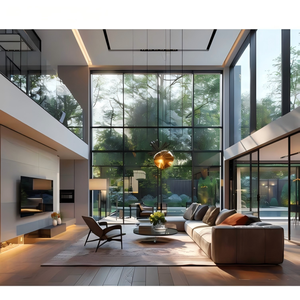
Curated Product Catalog
Engineered Architectural Aluminum Windows & Commercial Systems
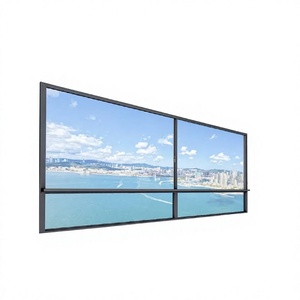
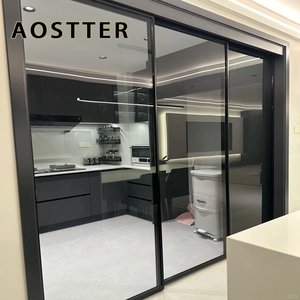
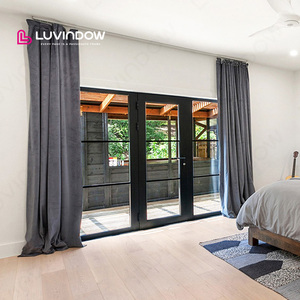
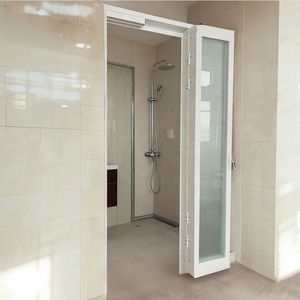
Direct wholesale fenestration portfolio engineered to exceed international thermal break parameters, structural design pressure, and air-water infiltration thresholds for residential developments and luxury projects.
Manufacturing Excellence
Enterprise Infrastructure & Quality Control Systems
Under the brand DERCHI (Guangdong Dejiyoupin Doors and Windows Co., Ltd.), we leverage 25+ years of specialized fenestration manufacturing, advanced German CNC machinery, and rigorous testing protocols across a massive scale.
180,000 m²
Modern Production Base
25+ Years
Precision Fabrication
100+
National Patents Granted
18,000+
Global Projects Completed
Patented 4-Side 6-Point Locking
Exclusive mechanical invention patent providing multi-point compression sealing across all four perimeter sides, elevating forced-entry resistance to RC3/PAS 24 security benchmarks while eliminating peripheral draft leakage.
Rigorous 360-Degree Quality Auditing
Every extrusion batch undergoes spectral alloy analysis (6063-T5/T6 primary billet), hydrostatic testing, spectrophotometric coating thickness verification (AAMA 2604/2605), and helium-mass leak detection on insulated glass units before export crating.
Complete International Compliance
Certified compliance across high-scrutiny regulatory frameworks: NFRC and Florida Hurricane Impact testing (USA), CSA A440 (Canada), CE EN14351-1 (Europe), and AS2047 (Australia), backed by full ISO 9001 certified manufacturing facilities.
Technical Benchmark Matrix
Engineering Specifications: Bridging Architecture & Thermodynamics
Evaluating wholesale window suppliers requires scrutiny of profile geometry, alloy temper, cavity insulation, and glass edge thermodynamics. The comparative matrix below outlines our engineering benchmarks against standard market alternatives.
| Performance Parameter | DERCHI Architectural Standard | Generic Chinese Commodity Grade | International Standard Baseline |
|---|---|---|---|
| Alloy Metallurgy & Wall Thickness | Virgin 6063-T5 / T6 Aluminum; 1.8mm – 3.0mm structural webs | Recycled billet mix; 1.2mm – 1.4mm uneven walls | AAMA / ASTM B221 (Min. 1.4mm - 2.0mm) |
| Thermal Isolator Technology | Polyamide PA66 GF25 techno-polymer struts (24mm - 39mm) | Low-grade PVC thermal fillers prone to shrinkage | ISO 10077-2 / NFRC 100 U-factor threshold |
| Glazing System & Sealant | Double/Triple Low-E + Argon gas (90%+) + Technoform Warm-Edge | Single-seal aluminum box spacer with ordinary desiccant | IGCC / EN 1279 / CSA A440.2 Gas Retention |
| Overall U-Factor (W/m²·K / BTU) | Uw ≤ 0.95 - 1.4 W/m²·K (0.17 - 0.25 BTU/hr·ft²·°F) | Uw ≥ 2.8 - 3.8 W/m²·K (0.49 - 0.67 BTU/hr·ft²·°F) | ENERGY STAR® Version 7.0 Northern Targets |
| Weather Gaskets & Permeance | Continuous vulcanized co-extruded EPDM triple-seal barriers | Sponge rubber or PVC stripping; fast embrittlement | ASTM E283 Air Leakage ≤ 0.1 cfm/ft² |
| Surface Treatment & Weatherability | Qualicoat Class 2 / AkzoNobel Fluorocarbon AAMA 2605 (30-yr) | Standard anodizing or thin architectural powder (<40 μm) | 3,000 hr salt-spray corrosion resistance |
Market Intelligence
Future Procurement Trends in the Global Aluminum Fenestration Market
Driven by evolving building energy directives, stringent carbon reporting, and architectural demands for panoramic glazing, procurement methodologies are undergoing fundamental shifts.
1. Near-Zero Energy (NZEB) & Passive House Directives
Global energy codes (EU EPBD, US IECC 2024, Canada NBC Tier 5) are mandating radical reductions in fenestration envelope U-values. Importers are migrating away from dual-pane systems toward automated argon-injected triple and vacuum insulated glass (VIG) composites, coupled with 34mm+ polyamide multi-chamber thermal breaks.
2. Low-Carbon "Green Aluminum" & EPD Verification
Cross-border carbon tariffs such as the EU Carbon Border Adjustment Mechanism (CBAM) are compelling commercial developers to verify product environmental footprints. Procurement leaders now demand Environmental Product Declarations (EPDs) with aluminum smelted using renewable hydro or solar power to drastically diminish embodied carbon.
3. Minimalist Sightlines with High Structural Load Capacities
Contemporary architectural demand mandates oversized, floor-to-ceiling glass expanses with nearly invisible outer frames (under 25mm interlock sightlines). Achieving structural deflection requirements under hurricane windloads (up to 5000 Pa) requires specialized structural silicone glazing and internal steel/carbon-fiber reinforcements.
Engineering Innovation
Manufacturing Technology Transformations in Export-Oriented Factories
Leading Chinese manufacturers have transitioned from manual workshop assembly to digitized Industry 4.0 production environments, directly overcoming traditional international supply chain pain points.
5-Axis CNC Precision Mitering
Eliminating manual layout errors with fully automated twin-head saws and 5-axis CNC machining centers achieving dimensional tolerances within ±0.2mm and zero-gap 45° corner crimping.
Cast-in-Place Corner Injection
Replacing simple mechanical screw assembly with hydraulic cast-in-place bi-component epoxy corner stake injection, guaranteeing 100% water tightness and long-term diagonal rigidity.
Automated IGU Robotic Sealing
Fully automated robotic washing, desiccant filling, and secondary polysulfide/silicone extrusion lines ensure continuous seal integrity and dew-point suppression down to -60°C.
Smart Building Sensor Integration
Hidden motorized actuators, magnetic perimeter status sensors, micro-ventilation louvers, and smart tint electrochromic connectivity natively routed inside the profile cavity chambers.
Procurement Knowledge Base
Frequently Asked Sourcing & Engineering Questions
Direct technical answers addressing critical verification points, certification recognition, supply chain logistics, and contract protection protocols when procuring from Chinese exporters.
►
How do international builders verify NFRC, CSA, and CE certifications from Chinese manufacturers?
Always request the complete laboratory test package issued directly by accredited third-party test bodies (such as Intertek, UL, or Keystone Certification) containing the specific manufacturer license code, tested specimen matrix dimensions, and exact glass/spacer layup. Cross-reference the registered simulation serial numbers on the online NFRC Certified Products Directory (CPD) to confirm authenticity prior to placing contractual deposits.
►
What are the essential packaging safeguards to prevent maritime transit damage?
For long-distance ocean freight, windows must not be shipped loose. Professional exporters employ five-layer protective packaging: primary PE scratch-proof film, multi-point foam corner protectors, vacuum-sealed desiccated moisture barriers, corrugated cushioning, and total enclosure in ISPM-15 heat-treated plywood crates fitted with internal bracing, tip-and-tilt indicators, and shock sensors.
►
How should buyers navigate rough opening dimensional variances between metric and imperial standards?
Reputable Chinese engineering exporters construct millwork exclusively according to confirmed CAD shop drawings translated to dual-unit dimensions (imperial fractions and millimeter equivalents). Standard practice deducts an engineered installation shim tolerance (typically 1/4" to 3/8" or 6mm-10mm perimeter perimeter perimeter gap) from the rough opening, accounting for thermal expansion coefficients.
►
What hardware brands ensure trouble-free operation over a 20+ year service life?
Top-tier wholesale exporters configure window and door assemblies using authentic European hardware mechanisms (such as Siegenia, Roto, GU, or Sobinco) or proprietary patented systems tested to 50,000+ continuous mechanical cycles. All moving elements, multi-point transmission gearboxes, and corner drives must be constructed of 304 or 316 marine-grade stainless steel to resist salt-fog corrosion.
►
How does the Foshan aluminum cluster offer competitive advantages over other manufacturing hubs?
Foshan in Guangdong Province is the world's most concentrated architectural aluminum ecosystem. Within a 30-kilometer radius sits the entire value chain: specialized mold-extrusion toolmakers, primary chemical billet smelters, high-capacity fluorocarbon/anodizing finishing plants, specialized gasket compounders, and high-tech glass processing facilities. This dense clustering allows DERCHI to engineer custom extrusions in as little as 10-14 days while maintaining unmatched economies of scale.
Factory Direct Partnership
Initiate Your Commercial Wholesale Consultation
Whether specifying high-performance thermal break casements, expansive structural sliding patio doors, or hurricane-rated curtain walls, connect directly with our senior engineering team to receive full CAD shop drawings, acoustic simulation reports, and mill-direct commercial proposals.
Get a Quote