Engineered Aluminum Window & Door Configurations
Explore our precision-engineered fenestration assemblies configured for rigorous thermal, structural, and acoustic compliance across international building zones.
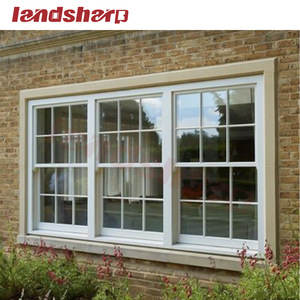
Landsharp American Style Aluminum Single Pane Double Hung Windows Vertical Sliding Sash Windows Triple Double Hung Windows
- Profile: 6063-T6 Architectural
- Counterbalance: Constant Force Block
- AAMA Rating: H-CW50 Class
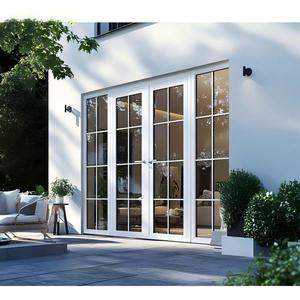
Sunnysky Top Quality Patio Exterior Glass Door Glass Aluminium French Entry Door Double Glazed Aluminum Double Casement Door
- Glazing: 5mm+12A+5mm Low-E
- Sealing: Co-Extruded EPDM
- Locking: Multi-Point Deadbolt
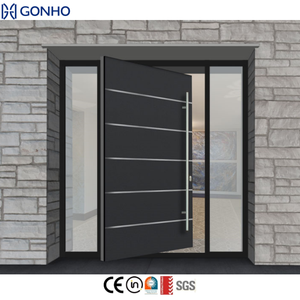
WANJIA Modern Waterproof Swing Aluminium Exterior Pivot Doors Front Entry Glass Door
- Pivot Hinge: Heavy-Duty German Floor
- Infiltration: Weather-Resistant Drop Seal
- Sash Width: Up to 1800mm Span
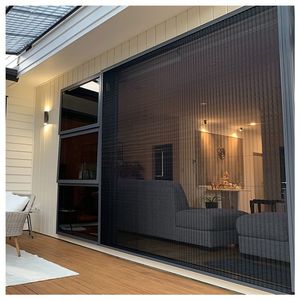
Aluminum Alloy Frame Anti Mosquito Net Plisse Retractable Screen Door Pleated Mesh Fly Screen Door
- Screen Wire: High-Tension Polyester
- Track Profile: 3mm Low-Barrier Sill
- Frame: Extruded Powder-Coated
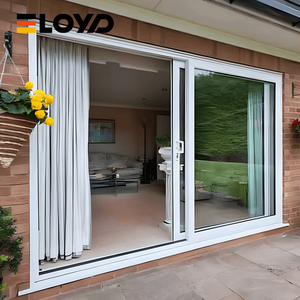
Eloyd Custom Modern Aluminum Glass Sliding Doors with Waterproof Hurricane Impact Lift Slide for Villa Garden 5-Year Warranty
- Impact Standard: ASTM E1886 / E1996
- Glass Spec: 6mm+2.28PVB+6mm Lami
- Hardware: German 400kg Lift Tandem
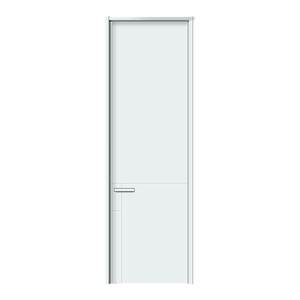
White Primed Aluminium Wood Bedroom Door Custom Contemporary Slab Panel Soundproof
- Core Tech: Solid Acoustic Composite
- Jamb Profile: Concealed Aluminum Subframe
- STC Rating: STC 38 Sound Dampening
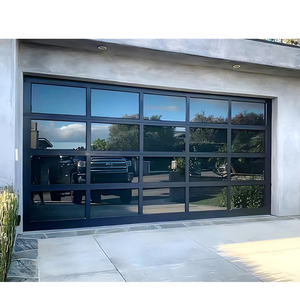
Automatic Black Aluminum Frosted Glass Sectional Residential Garage Door
- Sash Design: Anodized T6 Framing
- Infill: Tempered Acid-Etched Low-E
- Operator: Smart IoT Torsion Motor
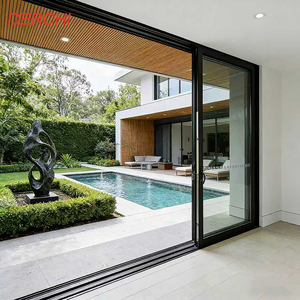
DERCHI NFRC USA Exterior Conceal Stacking Sliding Patio Door Large Double Tempered Aluminumdoor Hidden Glass Pocket Slide Doors
- Thermal Barrier: 34mm Polyamide PA66-GF25
- Testing: NFRC Certified / Florida DP50
- Locking System: Patented 4-Side 6-Point
Why Global General Contractors & Specifiers Source With DERCHI
Combining Foshan's precision primary aluminum extrusion supply chain with European CNC fabrication standards and Xinhua News Agency brand endorsement.
Proprietary 4-Side 6-Point Forced-Entry Security
Unlike conventional hardware offering single-point or latch engagements, DERCHI’s patented mechanical locking gear engages perimeter deadbolts concurrently along all four sash quadrants. This neutralizes jimmying forces, structural racking under wind load, and sash warping under negative pressure.
Zero-Error CNC Production Lines
Operating across an integrated 180,000 m² Industry 4.0 footprint in Foshan, five-axis computerized CNC profile machining centers mill drainage slots, hinge seatings, and corner joint keys with tolerances restricted to ±0.2mm, eliminating site alignment friction for North American installers.
Multi-Jurisdictional Certification Suite
Eliminate permit rejection risks. DERCHI exports fenestration products backed by laboratory test reports verifying physical compliance under NFRC (US energy indexing), CSA A440 (Canadian snow/wind loads), Florida Building Code (High-Velocity Hurricane Zone / Miami-Dade impact), and European CE EN14351-1.
Metallurgy, Thermal Barriers, and Structural Integrity in Export-Grade Fenestration
Architectural fenestration procurement from China requires navigating significant variance in raw material metallurgy, extrusion standards, and thermal bridge mechanics. Premier manufacturers differentiate themselves fundamentally by rejecting scrap aluminum blends in favor of virgin billet 6063-T6 or 6060-T66 aluminum alloys, maintaining strict silicon-to-magnesium ratios to maximize tensile yield strength (>160 MPa) and anodizing surface depth.
Thermal isolation performance depends on the geometry and material composition of the thermal break cavity. Inferior assemblies utilize PVC extrusions that embrittle and detach across freeze-thaw cycles. In contrast, institutional export systems incorporate polyamide PA66 reinforced with 25% short glass fiber (PA66-GF25), achieving matching linear thermal expansion coefficients with aluminum to preserve mechanical adhesion up to 200°C.
Technical Insight: Specifying multi-cavity thermal break designs over 34mm wide allows commercial fenestration to drive whole-window thermal transmittance below U-values of 1.2 W/m²K (U-factor < 0.22 BTU/hr·ft²·°F), satisfying strict ENERGY STAR® Northern Climate Zone standards without compromising architectural glass-to-frame ratios.
Furthermore, structural joinery relies on crimped cast-aluminum corner keys injected with two-part polyurethane structural adhesive (corner matrix pinning). This prevents micro-fissuring of the miter joint during transit or thermal shock, eliminating moisture penetration at the frame corners for the entire service life of the envelope.
| Compliance Code | Core Test Metric | DERCHI Tested Range | Target Market |
|---|---|---|---|
| NFRC 100 / 200 | U-Factor, SHGC, Visible Transmittance | U-Factor 0.19 – 0.26 | United States (All Climate Zones) |
| CSA A440.2 | Energy Rating (ER), Air/Water Infiltration | Pass (A3, B7, C5 Class) | Canada (National Building Code) |
| ASTM E1886 / 1996 | Large Missile Impact (Missile Level D) | DP 50 – DP 70 Wind Load | Florida / Coastal Hurricane Zones |
| AS2047 / AS1288 | Deflection, Water Penetration (Pa) | 450 Pa Water / 3000 Pa Ultimate | Australia & New Zealand |
| EN 14351-1 (CE) | Acoustic, Thermal, Dangerous Substances | Class 4 Air / Class 9A Water | European Union & UK (UKCA) |
Future Procurement Trends in Architectural Aluminum (2025–2030)
Key paradigm shifts shaping global supply chain strategies, carbon regulations, and technical specifications for commercial developers.
Low-Carbon Smelting & CBAM Verification
With the European Carbon Border Adjustment Mechanism (CBAM) and US clean procurement mandates taking hold, tier-1 Chinese manufacturers are transitioning from coal-fired smelting to hydropower-smelted green aluminum billets. Procurement contracts now frequently demand certified Product Environmental Footprint (PEF) and third-party verified Environmental Product Declarations (EPD) to prevent punitive border carbon tariffs.
Vacuum Insulated Glazing (VIG) Integration
The demand for zero-energy buildings (ZEB) has exposed the limits of standard double and triple argon IGUs, which introduce heavy dead-load stress on hardware. Forward-looking exporters are integrating hybrid Vacuum Insulated Glass units. With center-of-glass U-values reaching 0.45 W/m²K in an ultra-slim 8.3mm profile, architects can realize narrow frame profiles without structural compromise.
BIM Integration & Parametric Shop Modeling
Procurement is shifting from 2D static shop drawings to dynamic Revit and IFC-based BIM objects. Exporters collaborate directly with structural engineers through algorithmic parameterization. This confirms deflection clearances, anchor placement calculations, and water barrier continuity before extrusion tooling starts, cutting rough-opening installation errors to virtually zero.
Frequently Asked Questions by Overseas Commercial Importers
Direct, engineering-backed answers addressing the operational, fiscal, and regulatory complexities of importing custom fenestration assemblies from China.
How do buyers mitigate anti-dumping duties (AD/CVD) on aluminum imports?
What specific anodizing or powder coating standards prevent coastal corrosion?
How are oversized glass and slim-frame systems crated to eliminate breakage during ocean transit?
Can Chinese manufacturers accommodate custom imperial rough-opening dimensions?
What third-party factory audits and Factory Acceptance Testing (FAT) should be requested?
What is the realistic project lead time from initial drawings to job-site delivery?
Initiate Your Engineering Specification & Global Procurement
Direct factory procurement backed by NFRC/CSA certifications, patented four-side six-point forced-entry mechanics, and a 180,000 m² advanced fabrication infrastructure in Foshan, China. Connect with our senior architectural fenestration engineers today.