Architectural Portfolio
Engineered Aluminum Window & Glazing Solutions
High-performance configurations fabricated for extreme weathering, commercial acoustic dampening, and rigorous North American & European thermal metrics.
Engineering Standards
Architectural Specification & Structural Mechanics
A comprehensive look at thermodynamic optimization, water barrier deflection, and mechanical integrity in export-grade aluminum awning profiles.
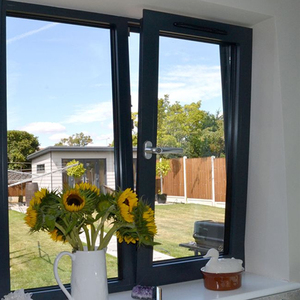
Aluminum awning windows serve an irreplaceable function in contemporary building envelope design, bridging high-volume passive ventilation with uncompromised precipitation resistance. Top-hinged and opening outward from the bottom, these units utilize positive exterior wind loads to compress multi-layered EPDM gaskets firmly into structural chambers, yielding superior water-penetration resistance compared to standard sliding units.
When engineering awning windows for cross-continental delivery—particularly to regions experiencing intense thermal shifts across North America, Northern Europe, and coastal storm corridors—the integration of low-conductance thermal strut technology (PA66 GF25) is mandatory. Without structural thermal separation, aluminum's innate conductivity (approx. 160 W/m·K) compromises the building envelopment, causing interstitial condensation and failing to meet strict Energy Star and regional U-factor mandates.
| Performance Criteria | Commercial Grade (AAMA/WDMA/CSA) | DERCHI High-Performance Awning Series | Testing & Certification Protocol |
|---|---|---|---|
| Thermal Transmittance (U-Factor) | U ≤ 0.30 - 0.35 BTU/(h·ft²·°F) | U ≤ 0.18 - 0.22 BTU/(h·ft²·°F) | NFRC 100 / 200, ENERGY STAR v7.0 |
| Solar Heat Gain Coefficient (SHGC) | 0.25 - 0.40 depending on Zone | Custom tuned: 0.16 to 0.45 via Low-E stacks | NFRC 200 / ISO 9050 Spectrometry |
| Air Infiltration Rating | ≤ 0.30 cfm/ft² @ 1.57 psf (75 Pa) | ≤ 0.05 cfm/ft² (Hermetic Compression Gaskets) | ASTM E283 / CSA A440.2 Level A3 |
| Water Penetration Resistance | 300 Pa to 450 Pa (Static pressure) | 720 Pa to 1050 Pa (Continuous sill weepage) | ASTM E331 / ASTM E547 Dynamic Testing |
| Design Pressure (DP / Structural) | Class CW30 - CW50 | CW70 to AW100 (Severe Storm / Hurricane Impact) | ASTM E330 / Miami-Dade TAS 201/202/203 |
| Acoustic Isolation (STC / OITC) | STC 28 - 32 dB | STC 38 - 45 dB (Laminated acoustic interlayers) | ASTM E90 / ASTM E413 Acoustic Chambers |
Manufacturing Supremacy
Guangdong Dejiyoupin: Verified Production Integrity
Backing international window brands, general contractors, and large-scale residential projects through precision automation and proprietary anti-intrusion patents.
180,000 m²
Intelligent Industrial Base
25+ Yrs
Manufacturing Heritage
100+
Patents & Intellectual Rights
18,000+
Completed Global Projects
Patented Multi-Point Locking
Our awnings utilize our exclusive four-side six-point patented lock mechanism, providing anti-theft resistance (RC2/RC3 compliant) and unified sash perimeter compression against wind suction forces.
Zero-Error CNC Machining
With an annual capability surpassing 1,000,000 m², profiles are processed using German-engineered automated cutting, multi-axis corner crimping, and computerized injection of silicone weather barriers.
International Certifications
Export compliance is independently verified through NFRC (US), CSA (Canada), Energy Star, CE (Europe), and AS2047 (Australia), backed by ISO 9001 certified batch-traceable quality control.
Brand Provenance & Recognition
Recognized as a "China Famous Brand" by Xinhua News Agency, DERCHI combines high-capacity production with dedicated engineering support teams for international bespoke projects.
Bespoke Shop Drawings & BIM
Our 30+ internal R&D engineers generate shop drawings in imperial or metric increments, detailing perimeter shim spaces, anchor points, sub-sills, and mullion structural load analyses.
Containerized Ocean Protection
To prevent electrolytic reaction and frame warping during transoceanic shipping, units are wrapped in peelable protective film, foam-cushioned, and crated in fumigated IPPC-grade wooden enclosures.
Market Foresight
Future Procurement & Engineering Trends
Anticipate regulatory changes, thermal thresholds, and mechanical innovations shaping the fenestration export market through 2030.
Stringent Decarbonization Mandates
North American and EU building codes increasingly target whole-building lifecycle embodied carbon. Procurement decisions now favor window extruders utilizing primary ingots processed via low-emission renewable energy, alongside recyclable 6063-T5/T6 alloys with verifiable Environmental Product Declarations (EPDs).
Vacuum Insulated Glazing (VIG) Systems
As architects push for slimmer frame profiles without degrading R-values, standard dual-pane insulated glass is yielding ground to hybrid Vacuum Insulated Glazing configurations. This enables slimline awning profiles to reach center-of-glass metrics as low as U-0.08 BTU/(h·ft²·°F) within standard sash depths.
Building Automation & Concealed Actuation
Manual crank handles and external rotary operators are being superseded by concealed 24V DC electromechanical chain actuators hidden directly within the jamb extrusion. These actuators interface seamlessly with BACnet, KNX, or smart home automation platforms for night-purge passive indoor cooling.
Architectural Consolidation: Single-Source Exterior Packages
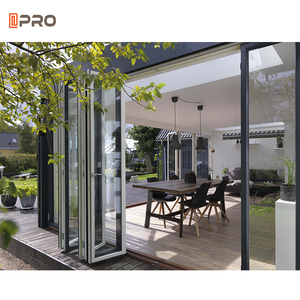
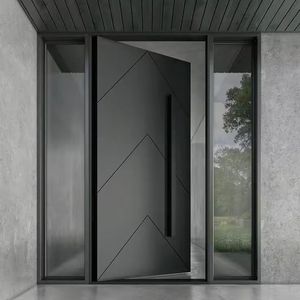
Global developers are consolidating fenestration subcontracts to lower site coordination liability. Instead of ordering casements from one source, curtain systems from another, and exterior entry doors elsewhere, purchasing directors specify coordinated systems—including thermally broken aluminum awning windows, bifold glass walls, pivot entry doors, and heavy-duty sliding patio enclosures—from single-source manufacturers like DERCHI capable of enforcing architectural finish tolerances across entire façades.
Procurement Clarity
Frequently Asked Questions for Project Buyers
Crucial technical details, certification verifications, and operational workflows for B2B cross-border sourcing.
What specific certifications are required to clear North American municipal inspections?
For projects within the United States and Canada, window units must comply with the North American Fenestration Standard (NAFS / AAMA / WDMA / CSA 101/I.S.2/A440). Furthermore, energy code compliance requires testing through the National Fenestration Rating Council (NFRC), validating labeled U-factor and SHGC values for the complete window assembly. DERCHI provides certified testing matrices that map our specific extrusion profiles and Low-E glass build-ups directly to local building energy regulations, preventing stop-work notices during municipal inspections.
How are rough openings, masonry reveals, and mullion integrations coordinated?
Following receipt of architectural plans, our engineering department drafts CAD shop drawings showing rough opening clearances (typically 1/4" to 1/2" perimeter shimming reveals), nail fin or strap anchor configurations, and sill flashing receiver provisions. In heavy multi-window tandem groupings, structural calculations verify wind-load resistance across intermediate vertical and horizontal mullion reinforcements, ensuring the entire assembly matches local wind velocity specifications prior to extrusion cutting.
What surface finishes are recommended for coastal installations and high UV environments?
For standard atmospheric exposure, architectural powder coatings adhering to AAMA 2604 standards (5-year Florida exposure compliance) are standard. However, for coastal environments within 3 miles of saltwater or high-UV subtropical zones, we recommend AAMA 2605 fluoropolymer coatings (such as PVDF / Kynar 500 containing 70% fluoropolymer resin) or Class I architectural anodizing (0.7 mil minimum thickness). These surface coatings preserve color retention, prevent chalking, and resist airborne salt aerosol pitting.
How does factory direct purchasing mitigate shipping breakage and container moisture risks?
Ocean freight presents harsh vibration forces and extreme humidity fluctuations across transit zones. DERCHI secures insulated glass edges using industrial silicone glazing stops within the frame, applies scratch-resistant blue surface film to aluminum sections, and inserts silica desiccant pouches inside individual packaging wraps. The completed frames are palletized within heavy plywood, non-fumigation export crates reinforced with steel strapping. Each shipping container is balanced and locked to eliminate movement during transit.
What is the standard production cycle and lead time from drawing sign-off to port arrival?
Upon final sign-off of shop drawings and deposit confirmation, customized fabrication generally requires 25 to 35 business days, depending on glass specifications (e.g., custom ceramic frit, laminated Low-E units, or shaped profiles). Transpacific transit to US/Canadian West Coast ports typically takes 18 to 22 days, while East Coast deliveries span 30 to 35 days. Real-time factory tracking and milestone production photos keep your procurement team updated prior to container dispatch.
Request Engineering Proposal & Factory Pricing
Submit your door and window architectural schedules to receive verified U-factor estimates, system drawings, and factory direct quotes.