Export Product Selection
High-Performance Architectural Fenestration Systems
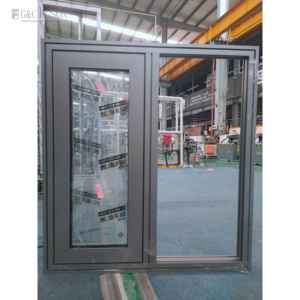
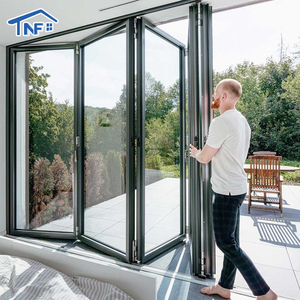
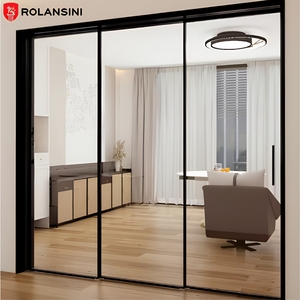
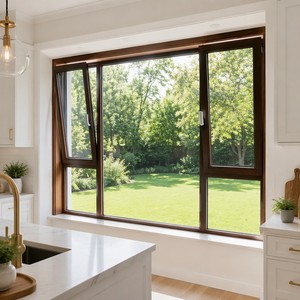
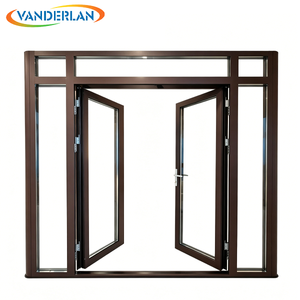
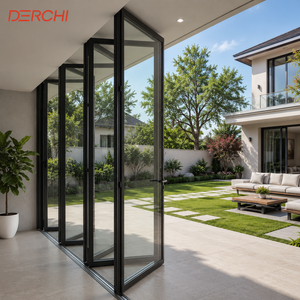
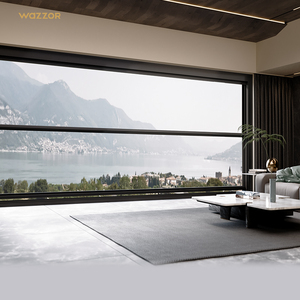
Manufactured to rigid European CE norms and North American impact standards, each casement assembly and multi-slide system integrates multi-point continuous locking, isobaric chamber drainage, and argon-filled insulated glazing units.
Industry White Paper Analysis
Evolutionary Shifts in Aluminum Casement Engineering
Global decarbonization initiatives, tightening building envelope regulations (such as the EU Energy Performance of Buildings Directive and ASHRAE 90.1), and rapid architectural iterations have elevated the aluminum casement window from a conventional facade aperture to an engineered climatic barrier.
Thermal Barrier Innovation: Polyamide Technoform Struts
Traditional non-insulated frames are legally obsolete in contemporary commercial contracting. Modern high-efficiency casements utilize multi-cavity PA66 GF25 polyamide thermal break bars, separating exterior and interior aluminum extrusions. Combined with foamed polyurethane core fillings and warm-edge TGI spacer bars, these systems reduce linear thermal bridging (Ψ-value) and enable overall window thermal transmittance (Uw ≤ 0.85 W/m²·K), directly compliant with European Passive House requirements.
Patented 4-Side 6-Point Forced-Entry Security
Global procurement metrics prioritize active occupant defense. DERCHI's proprietary four-side six-point hardware locking array interlocks forged mushroom cam heads with hardened steel keeps directly anchored inside the reinforced profile internal chambers. This prevents prying forces in excess of 4,500 N, achieving European EN 1627 RC3 burglary resistance ratings while maintaining consistent peripheral gasket compression across multi-level cycle testing.
Acoustic Attenuation & Extreme Weather Defense
Urban density demands verified sound transmission mitigation. Engineered casements using asymmetric double- and triple-laminated glass configurations (e.g., 6mm Low-E + 16Ar + 4mm + 0.76PVB + 4mm) achieve verified acoustic reductions up to Rw 44 dB. In coastal typhoon zones, reinforced 6063-T6 aluminum structural mullions guarantee positive wind load resistance up to 5,500 Pa (CE Class C5 / DP70).
Market Intelligence & Forecasting
Future Procurement Trends in Architectural Glazing Systems
B2B commercial real estate developers, contractors, and fenestration import syndicates must adapt their supply chains to accommodate major industry transformations driving procurement through 2030.
1. Embodied Carbon & Recycled Billets
Procurement bids in the EU and North America increasingly demand Environmental Product Declarations (EPDs). Sourcing is shifting toward low-carbon aluminum billets refined using hydroelectric energy with a verified minimum of 40% post-consumer recycled aluminum, cutting carbon intensity below 4.0 kg CO2/kg Al.
2. Ultra-Slimline Sightlines
Modern architectural aesthetics favor minimal structural aluminum exposure with maximal glass-to-frame ratios. Concealed casement hinges, hidden sash profiles, and zero-gravity mechanical integration are supplanting chunky traditional frames without compromising structural moment of inertia (Ix ≥ 45 cm⁴).
3. Smart Building Integration (IoT)
Casements are shifting from passive mechanical assemblies to smart digital building endpoints. Concealed vertical and horizontal actuators interface directly with KNX, BACnet, and Zigbee Building Management Systems (BMS) for motorized nighttime purge cooling and weather-sensor-triggered closure.
4. Extreme Climate Resiliency
With unpredictable extreme weather worldwide, specifiers are adopting stringent dual-certification thresholds: simultaneous CE marking (EN 12210 wind, EN 12208 water, EN 12207 air) alongside American AAMA/WDMA/CSA 101/I.S.2/A440 ratings to ensure comprehensive storm protection.
| Performance Parameter | Standard European CE (EN 14351-1) | North American Code (NFRC/CSA) | DERCHI High-Performance Casement Standard |
|---|---|---|---|
| Air Permeability | Class 3 (≤ 9.0 m³/h·m²) | ASTM E283 ≤ 1.5 L/s·m² | CE Class 4 (≤ 3.0 m³/h·m²) |
| Watertightness | Class 7A (≥ 300 Pa) | ASTM E331 ≥ 300 Pa | Class E1050 (≥ 1,050 Pa Static Head) |
| Wind Load Resistance | Class C3 (ΔP 1,200 Pa) | DP 40 (1,920 Pa Test Load) | Class C5 / DP70 (≥ 3,500 Pa Design) |
| Overall Thermal Transmittance (Uw) | ≤ 1.4 W/m²·K | U-Factor ≤ 0.28 Btu/h·ft²·°F | Uw ≤ 0.82 W/m²·K (Passive Compliant) |
| Acoustic Attenuation (Rw) | Rw 32 dB (-1; -5) | STC 30 - 32 | Rw 42 to 45 dB (Laminated IGU) |
Manufacturing Credibility
Precision Manufacturing Scale Backed by Independent R&D
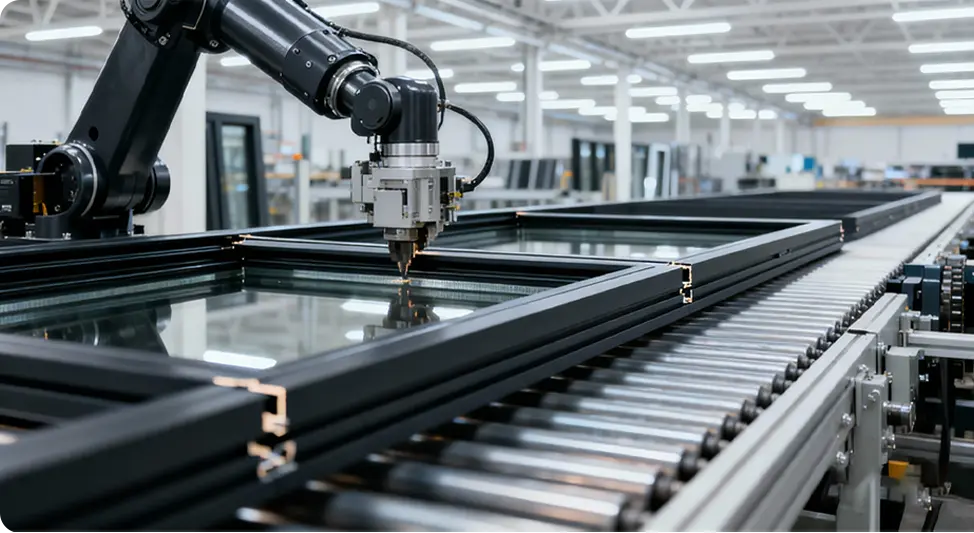
Operated by Guangdong Dejiyoupin Doors and Windows Co., Ltd., the DERCHI global production complex spans an expansive 180,000 m² modern facility. Honored as a "China Famous Brand" by Xinhua News Agency, we unite proprietary structural patents with German CNC milling lines to deliver zero-tolerance architectural glazing packages worldwide.
Over 25 Years of Fenestration Metallurgy
Continuous engineering operations since 1999, managing high-tensile 6063-T6 alloy extrusion, thermal-barrier crimping, and automated multi-angle structural corner jointing.
Full International Accreditation Portfolio
Direct factory certifications spanning CE (EN 14351-1), NFRC (USA), CSA (Canada), AS2047 (Australia), ISO 9001, and Florida High-Velocity Hurricane Zone (HVHZ) impact protocols.
360-Degree Quality Auditing & Digital Shop Drawings
Every opening is engineered on parametric BIM/CAD shop drawings with laser triangulation inspection before specialized seaworthy solid-timber crating.
Technical Clarifications
Frequently Asked Questions in Global Casement Procurement
Direct technical guidance addressing structural certifications, customized sizing parameters, thermal calculations, and seaworthy logistics protocols for overseas contractors and distributors.
What specific standards substantiate your CE Certification for aluminum casement windows?
Our aluminum casement windows comply directly with harmonized European standard EN 14351-1:2006+A2:2016 (Windows and doors - Product standard, performance characteristics). Every exported series undergoes independent third-party laboratory testing covering Air Permeability (EN 12207, achieving Class 4), Watertightness (EN 12208, reaching Class E1050), Resistance to Wind Load (EN 12210, certified Class C5), and Thermal Transmittance (EN ISO 10077-1/-2). Verified Declaration of Performance (DoP) certificates and factory production control audits are provided alongside all commercial shipping documentation.
How do you verify thermal modeling values (Uw, Ug, Ψ) for custom jobsite specifications?
Every project begins with finite-element thermal simulation using certified software according to ISO 10077-2. Our engineering office models the exact aluminum profile wall thickness, polyamide strut dimensions (typically 24mm to 34mm PA66 GF25), secondary insulation inserts, and exact glass build-up. We provide stamped thermal calculations indicating Center-of-Glass (Ug), Frame (Uf), and Overall Window (Uw) performance ratings for compliance with regional energy codes such as Title 24, IECC, and European EPBD standards.
Can you accommodate imperial dimensions, structural mullion calculations, and shop drawings?
Yes. Over 70% of our export output is tailored specifically to fractional imperial measurements (rough opening sizing) for the North American market, as well as millimeter dimensions for Commonwealth and European projects. Our in-house technical engineering staff prepares comprehensive 2D CAD elevations, sectional joinery details, perimeter caulking rebates, and 3D BIM models. Production begins only after project architects or general contractors formally review and approve sign-off drawings.
What surface finishes and corrosion protections are applied for coastal or high-salinity zones?
For marine environments, salt spray conditions, and heavy industrial exposure, we apply architectural powder coatings conforming to Qualicoat Class 2 / AAMA 2604 or 2605 standards using premium AkzoNobel or PPG fluoropolymer (PVDF) resins. These coatings provide proven resistance against ultraviolet degradation, chalking, and filiform corrosion, with salt-spray endurance surpassing 3,000 hours. Anodized architectural finishes conforming to Qualanod Class 20 (≥ 20 μm thickness) are also available.
How are overseas shipments packaged to prevent glass deflection, corner wracking, or seal damage?
Our multi-tier export packaging uses non-fumigation solid plywood crates lined with waterproof polyethylene film and desiccants. Every window perimeter is protected with high-density EVA foam corner buffers and stretch wrapping. Within shipping containers, custom steel A-frames and heavy-duty dunnage straps isolate the crates from mechanical movement during maritime transit, preventing frame racking or micro-fissures in insulated glass seals during long ocean journeys.
Initiate Your Engineering Consultation & Takeoff Review
Submit your architectural elevations, rough opening schedules, or energy compliance specifications. Our fenestration engineering group will prepare a detailed commercial proposal, including thermal simulation and shop drawing estimates, within 24 hours.