A washroom door faces more than daily opening and closing. It meets damp air, cleaning products, wet hands, and occasional impacts from bags or carts. The right Aluminium Washroom Door should suit these conditions, not just look clean in a product photo. Check the frame, panel, hinges, lock, and edge finish together. A weak detail can become the daily annoyance.
Material choice also sits within a larger building conversation. The United Nations Environment Programme’s 2024 Global Status Report for Buildings and Construction says the sector accounted for 32% of global energy demand and 34% of energy-related carbon dioxide emissions in 2023. Those figures describe buildings overall, not washroom doors specifically. Still, they make durability and material sourcing worth asking about. The International Aluminium Institute reports that recycling aluminium can save about 95% of the energy required to produce primary aluminium. That benefit depends on recycled content and credible supply information, so ask suppliers for product-specific details.
There is no perfect door. A light finish may show fingerprints; a textured surface may take longer to wipe. Consider room humidity, traffic, privacy needs, cleaning routines, and available repair parts before comparing prices. Look for clear specifications, reliable installation guidance, and evidence behind performance claims. This guide explains how to weigh those practical details and choose a door that fits the space—not merely the catalogue.
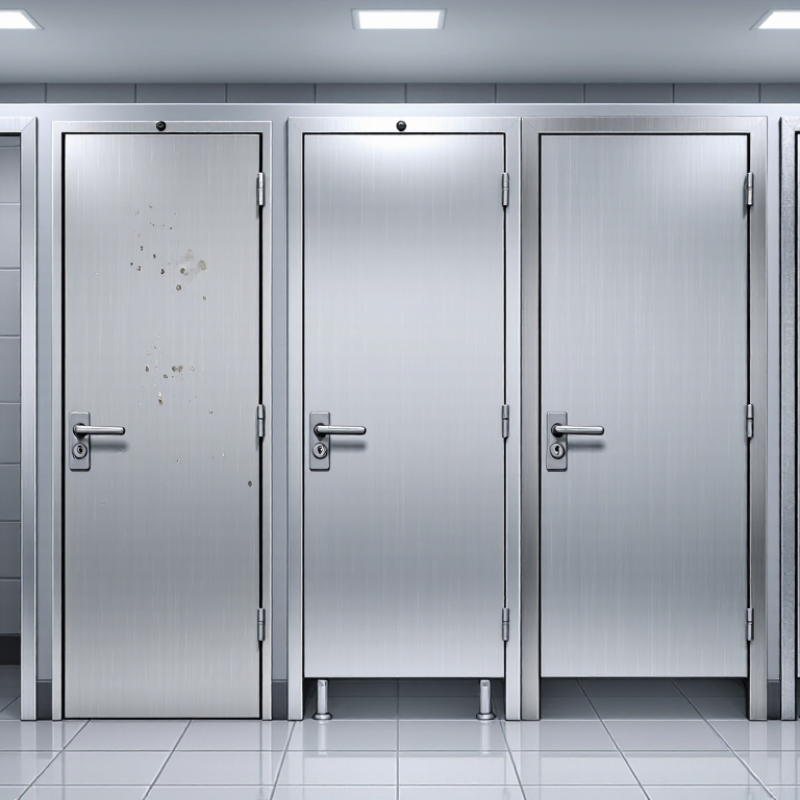
An aluminium washroom door combines a metal frame with an infill panel, such as compact laminate or frosted glass. The frame is light, so it can be easier to operate than a heavy solid door. Aluminium also resists moisture better than many untreated materials, but its finish and construction still matter. In humid rooms, poor coating or trapped water near joints may lead to wear over time.
Look closely at the frame corners, hinges, and handle before choosing. A sturdy hinge should hold the door steady without scraping the floor. The panel should provide the privacy the room needs, while ventilation gaps can help reduce stale air. Small details matter. Check whether the door swings freely in the available space, especially in a narrow washroom. A raised threshold might keep water out, but it can also create an awkward step.
I would not judge a door by appearance alone. A smooth powder-coated surface is practical to wipe, yet scratches can expose weaker areas beneath the finish. Ask how the frame is joined and whether the hardware suits frequent use. Those details are easy to miss. Even a well-made door can feel disappointing if the latch is noisy or the handle is uncomfortable. The best choice depends on moisture levels, privacy needs, and how often the door will be used.
Before choosing an aluminium washroom door, map who uses the room and how often. A staff washroom may see steady but moderate traffic; a station or school restroom can face repeated impacts, wet shoes, and frequent cleaning. Note peak periods, wheelchair access, privacy needs, and whether carts pass through. Small details matter. A door that swings into a narrow basin area may interrupt use, even when its panel is durable.
Measure the opening and check circulation before comparing finishes. The U.S. Access Board’s 2010 ADA Standards, section 404.2.3, specify a minimum 32-inch clear opening for accessible doors. That figure is a useful checkpoint, not a substitute for checking the complete layout and applicable requirements. Moisture also deserves attention. ASHRAE Standard 62.1-2022, Table 6-4, lists toilet-room exhaust rates of 50 cfm per water closet or urinal for intermittent operation, or 25 cfm for continuous operation. Ventilation helps define the environment, but it does not make every finish or hinge suitable.
Inspect the actual conditions: standing water near the threshold, cleaning chemicals, salty coastal air, and ventilation downtime. Aluminium is lightweight and does not absorb water like untreated wood, yet its coating, edges, fasteners, and hardware still need suitable protection. Ask how often staff clean the door and whether they use abrasive pads. I would not choose by material name alone. A sample installed beside the wash basin can reveal glare, noise, and awkward clearances that a specification sheet misses.
| Washroom Setting | Typical Usage Conditions | Key Requirements | Suitable Door Features | Practical Checks Before Selection |
|---|---|---|---|---|
| Family bathroom | Regular daily use; intermittent steam and splashing; usually moderate traffic. | Privacy, easy cleaning, and resistance to routine moisture. | Opaque or privacy-panel infill, a corrosion-resistant finish, and hardware suited to frequent use. | Check the opening dimensions, swing clearance, ventilation arrangements, and whether the finish is suitable for the room’s cleaning products. |
| Shower-adjacent washroom | Frequent humidity and occasional water spray, depending on the shower layout. | Moisture management, durable surfaces, and suitable seals where needed. | Aluminium frame with a suitable infill; select seals and hardware designed for the expected exposure. Avoid assuming the door assembly is waterproof unless it is specifically tested and rated for that use. | Confirm how far the door is from direct spray, how water drains, and whether the frame and hardware materials are appropriate for the exposure. |
| Public or commercial washroom | High daily traffic; frequent cleaning; repeated opening and closing. | Durability, reliable hardware, cleanability, and appropriate privacy. | Sturdy frame construction, robust hinges and latch, easy-clean surfaces, and opaque panels where privacy is required. | Check expected traffic, maintenance access, hardware duty suitability, and applicable accessibility and building requirements for the site. |
| Accessible washroom | May require wheelchair or mobility-aid access and additional manoeuvring space. | Clear opening width, usable hardware, and an unobstructed approach. | Door and handle configuration selected to suit the required clear opening and operation; sliding or outward-opening layouts may be considered where appropriate. | Measure the clear opening and manoeuvring area, and verify the design against local accessibility requirements before ordering. |
| Shared office or staff washroom | Repeated use throughout the day; cleaning may be scheduled regularly. | Privacy, dependable operation, and straightforward maintenance. | Privacy infill, a durable coating, replaceable hardware where practical, and a latch suited to the intended occupancy. | Confirm the required privacy level, lock function, cleaning routine, and availability of replacement hinges or handles. |
| Compact washroom | Limited floor area; door swing may interfere with fixtures or circulation. | Efficient use of space and safe, convenient access. | Consider a sliding or outward-opening configuration if it fits the layout and applicable safety requirements. | Check wall space, nearby fixtures, clearances, track placement if applicable, and access for future cleaning and maintenance. |
Aluminium washroom doors are commonly available as hinged or sliding designs, with solid panels or framed infill. Hinged doors are straightforward to inspect and adjust, but need clear floor space. Sliding doors save room in tight layouts; their tracks, however, can collect dust and require regular cleaning. For a busy shared washroom, check hardware strength and how easily staff can access it for maintenance.
Finish affects both appearance and upkeep. Anodised aluminium has a hard surface and suits areas exposed to frequent cleaning. Powder-coated finishes offer more colour choices, though scratches may be more noticeable on darker shades. Ask how the finish handles the cleaners used on site, and test a sample under the actual lighting. A swatch can look different beside cool tiles. Small details matter.
Privacy depends on more than the door panel. A reliable indicator lock, sturdy hinges, and carefully considered gaps help users feel secure. Solid panels generally block sightlines better than louvred designs, which trade privacy for airflow. Still, no standard washroom door provides complete sound privacy. The right balance depends on ventilation, room layout, and user needs. I would not choose by appearance alone; a beautiful finish cannot compensate for a lock that feels loose or a door that drags across the floor.
How to Choose the Best Aluminium Washroom Door?
A washroom door faces frequent use, humid air, splashes, and cleaning chemicals. Aluminium resists rust, but its finish, joints, and installation still need attention. The International Aluminium Institute estimates that about 75% of all aluminium ever produced remains in use. That figure reflects aluminium’s recyclability and long-term use, not the lifespan of a specific door. In practice, inspect frame corners and bottom edges, where water and grime often collect. Check the corners.
Safety depends on more than the door panel. In the United States, the Access Board’s 2010 ADA Standards set a maximum opening force of 5 pounds for most interior hinged doors. This is a useful accessibility benchmark, not a universal requirement; verify local standards. Choose handles and locks that are easy to operate with wet hands, and make sure privacy hardware releases reliably in an emergency. Hinges should suit the door’s weight and traffic. Poor alignment can cause rubbing, noise, and early wear.
For maintenance, ask how the finish handles routine cleaning and whether the supplier provides care instructions. Use a soft cloth and mild cleaner, then dry the frame and hardware. Avoid harsh or abrasive products unless the finish manufacturer confirms they are suitable. Inspect screws, hinges, seals, and latch action regularly. A door can look sound while a loose hinge quietly worsens; small checks help catch that early.
A practical checklist for evaluating durability, safety, hardware, and maintenance.
Bars count the checks in this guide’s shortlist; they are not product ratings or measured service-life data. Inspect frame condition, corrosion, finish, alignment, and water exposure for durability; check edges, secure mounting, privacy-latch operation, and emergency access for safety. Review hinges, latch, handle, closer, and fasteners as hardware. For maintenance, follow the manufacturer’s cleaning guidance, inspect moving parts, lubricate where specified, and tighten loose fixings.
Choosing an aluminium washroom door starts with the opening, not the catalogue. Measure the width at the top, middle, and bottom, then check the height on both sides. Older walls are rarely perfectly square. Record the smallest clear opening and check the floor level and any raised threshold. Measure twice. Small gaps matter. A few millimetres can affect clearance, sealing, and whether the door swings freely. Note nearby basins, hooks, and partitions, too.
Check installation needs before ordering. Confirm whether the frame suits existing tile, masonry, or a lightweight partition, and ask which fixing points are required. A door that looks suitable may need extra backing or a different hinge position. Check swing direction, ventilation gaps, privacy hardware, and access for future adjustment. Site conditions can surprise you; drawings may miss a pipe or uneven edge. I would not assume a standard size solves every fitting issue.
Supplier quality involves more than a polished product photo. Ask for material and finish specifications, hardware details, warranty terms, and clear measuring and fitting guidance. Look for consistent answers and stated tolerances, not just quick promises. If samples are available, inspect the frame corners, coating, and latch action by hand. A sample cannot show exactly how the installed door will perform in a damp, busy room. Keep measurements and agreed details on record.
It usually has a lightweight metal frame with a panel, such as compact laminate or frosted glass. The frame resists moisture, but joints and finishes still need care.
Hinged doors need clear floor space and are generally easy to inspect or adjust. Sliding doors suit tight layouts, but their tracks can collect dust. Check cleaning access.
Anodised finishes have a hard surface suited to frequent cleaning. Powder-coated finishes offer more colour choices, but scratches may show clearly, especially on dark colours.
Measure the opening at the top, middle, and bottom, plus the height on both sides. Record the smallest clear opening. Measure twice.
A solid panel, a dependable indicator lock, and carefully considered gaps can improve privacy. Louvred panels allow more airflow but may reveal sightlines.
Not completely. Typical washroom doors may reduce some sound, but they do not create full sound privacy. Layout and gaps matter.
Check frame corners, hinges, handle comfort, latch action, and finish quality. Ask about hardware, fixing points, warranty terms, and fitting guidance. A polished photo proves little.
Confirm the frame suits the wall, tiles, or partition. Check swing direction, nearby basins, hooks, thresholds, and ventilation gaps. Uneven walls can complicate fitting. I might still miss something.
Choosing the right Aluminium Washroom Door starts with understanding the space and how it will be used. Consider the washroom’s size, traffic, moisture levels, ventilation, and the privacy required. Compare suitable door styles, surface finishes, and panel options to find a balance between appearance, ease of cleaning, and the level of privacy users need.
Durability and safe, reliable operation also matter. Check the quality of the frame, hinges, locks, handles, and other hardware, and consider how much routine maintenance each option may require. Before ordering, confirm all measurements, clearances, and installation requirements. Finally, assess the supplier’s product information, workmanship, and support so the door can meet the practical needs of the washroom over time.